 YOUDA COMPOSITE
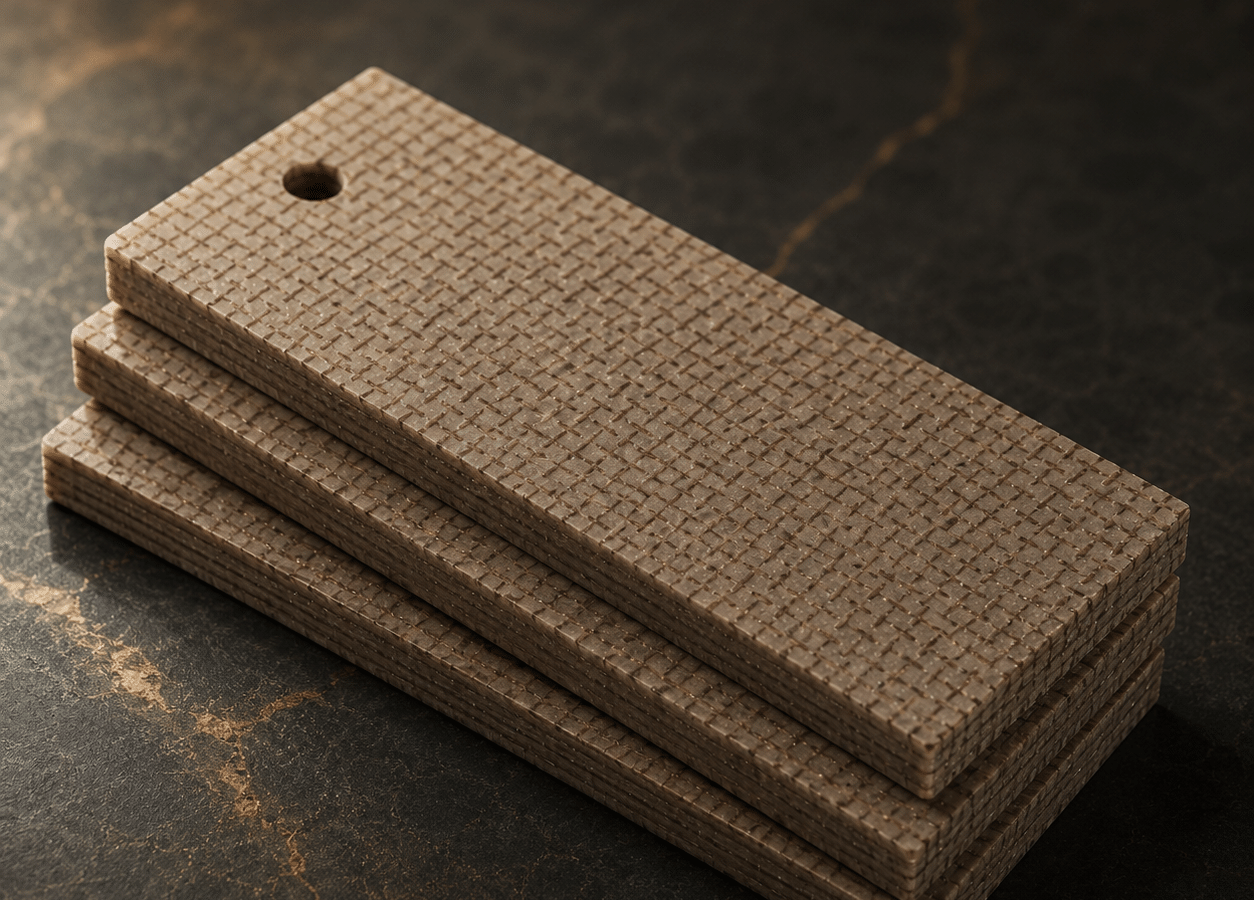
Ask a knife enthusiast about Micarta, and you will hear words like “warm,” “character,” and “patina.” Unlike G10’s industrial precision or carbon fiber’s high-tech appearance, Micarta has a reputation for feeling alive in the hand. It is a material that changes with use—darkening where fingers grip, polishing where it rubs against a pocket, and slowly becoming unique to its owner.
Micarta has been used in knife handles since the mid-20th century, but its roots go back much further. This article explains what Micarta is, how it is made, the different types available, and why it remains one of the most respected handle materials in the knife world.
What Is Micarta?
Micarta is a brand-name composite material made by layering fabric—typically linen, canvas, or paper—and saturating it with phenolic or epoxy resin. The layers are compressed under high heat and pressure until the resin cures, forming a dense, rigid sheet.
The name “Micarta” is a registered trademark of Norplex-Micarta, but like many brand names (think Kleenex or Velcro), it is now used generically to describe similar resin-impregnated fabric laminates from other manufacturers.
A Brief History
Micarta was developed by George Westinghouse around 1910, using phenolic resins invented by Leo Baekeland (the creator of Bakelite). It was originally designed as an electrical insulator. During World War II, it found its way into military equipment, and by the mid-20th century, knife makers recognized its potential for handles.
Westinghouse sold the Micarta division to International Paper in the mid-1980s. Production of the original formulation was discontinued by 1995. In 2003, Norplex acquired the brand and continues to manufacture Micarta today. Vintage “Westinghouse Micarta” commands premium prices among collectors for its superior quality and aging characteristics.
How Micarta Is Made
The manufacturing process is straightforward in concept but demanding in execution:
Fabric Preparation: Sheets of canvas, linen, paper, or other fabric are selected. The choice of fabric determines the final material’s appearance and properties.
Resin Impregnation: The fabric passes through a resin bath—traditionally phenolic resin, though modern versions often use epoxy. The resin saturates the fibers completely.
Layering: Multiple resin-soaked sheets are stacked. The number of layers determines the final sheet thickness.
Compression and Curing: The stack is placed in a hydraulic press and subjected to high heat and pressure. The resin polymerizes and bonds the layers into a single solid mass.
Cooling and Finishing: The cured sheets are cooled, trimmed, and machined into handle scales.
Key Properties of Micarta
Property | Value |
Tensile Strength (lengthwise) | 12,500+ psi |
Tensile Strength (crosswise) | 8,750+ psi |
Specific Gravity (density) | 1.30–1.40 |
Rockwell Hardness (M scale) | ~105 |
Moisture Absorption | Low to moderate |
Warm, Natural Feel
Micarta’s fabric substrate gives it a tactile quality that synthetic materials like G10 lack. It feels warmer in the hand because natural fibers transfer heat differently than glass. This makes Micarta more comfortable to hold in cold conditions.
Wet Grip—A Unique Advantage
One of Micarta’s most distinctive properties is that it actually becomes grippier when wet. Unlike G10, which can feel slick when smooth and wet, Micarta’s exposed fabric fibers swell slightly with moisture, increasing surface friction. This is why hunting knives, fishing knives, and marine tools frequently feature Micarta handles.
Patina Development
Phenolic-resin Micarta darkens over time when exposed to UV light, hand oils, and daily handling. OD green shifts toward brown. Natural and ivory tones develop warm amber depth. The surface polishes at high-contact points. After years of use, a Micarta handle tells the story of its owner.
Epoxy-resin Micarta stays color-stable and will not develop the same patina. Both approaches have their fans—some users want a handle that looks the same forever, while others specifically seek the aging character.
Good Shock Absorption
The organic fiber structure absorbs and disperses impact better than purely synthetic composites. This matters for heavy-use knives used for chopping, batoning, or other tasks that transmit shock through the handle.
Types of Micarta
Not all Micarta is the same. The base fabric dramatically changes the look, feel, and performance.
Canvas Micarta
Canvas is the most common type found on production knives. The coarse weave creates visible texture lines and a rugged appearance.
Appearance: Textured, with visible weave patterns when machined at angles.
Durability: Excellent. The thick fabric provides high impact resistance.
Grip: Good when textured, but polished canvas can feel slippery.
Best for: Outdoor knives, camp tools, hard-use fixed blades.
Linen Micarta
Linen uses a finer weave that compresses into a tighter structure. The result is a smoother, more refined material.
Appearance: Clean, refined. Takes a polish well and shows sharp, crisp edges when contoured.
Durability: Matches canvas in strength despite the finer appearance.
Grip: Some users report that linen actually improves its grip over extended use as the surface opens slightly.
Best for: EDC folders, gentleman’s knives, knives where refined looks matter.
Paper Micarta
Paper Micarta produces the smoothest finish with the finest grain structure. When polished, it resembles ivory.
Appearance: Ivory-like, smooth, elegant. Popular with collectors.
Durability: Hard, but the short paper fibers offer less shock absorption than canvas or linen.
Grip: Minimal when smooth and wet. Not ideal for working knives.
Best for: Collector pieces, light-duty applications, traditional pocket knives.
Burlap Micarta
Burlap’s coarse, loose weave creates the most aggressive texture of any Micarta variant.
Appearance: Three-dimensional, heavily textured. Distinctive and rugged.
Durability: Good, with unmatched grip performance.
Grip: The best wet grip of any Micarta type. Ideal for wet or bloody conditions.
Best for: Fishing knives, hunting knives, marine tools, working knives.
Downside: The rough texture can catch on pocket fabric and feel abrasive during extended carry.
Denim Micarta
A more recent addition, denim Micarta uses blue denim fabric for a distinctive visual identity.
Appearance: Familiar denim texture with a unique look unlike traditional variants.
Performance: Comparable to canvas Micarta in durability and aging.
Best for: Custom and semi-custom knives where visual differentiation is desired.
Micarta vs. G10
These two materials are often compared because they share a similar manufacturing process. The key difference is the reinforcement fiber: fabric for Micarta, fiberglass for G10.
Property | Micarta | G10 |
Base Material | Fabric (linen, canvas, paper) | Fiberglass cloth |
Density | 1.30–1.40 g/cm³ | 1.80–1.85 g/cm³ |
Rockwell M Hardness | ~105 | 110 |
Moisture Absorption | Low to moderate | Near zero |
Wet Grip | Excellent (improves when wet) | Good (when textured) |
Aging | Develops patina (phenolic) | Color-stable |
Feel | Warm, organic | Hard, industrial |
Cost | Moderate to high | Moderate |
When to Choose Micarta
Choose Micarta when you want a handle that:
Develops character and patina over time
Provides excellent grip in wet conditions
Feels warm and organic in the hand
Absorbs shock well for heavy cutting tasks
Has a more traditional, less synthetic appearance
When to Choose G10
Choose G10 when you want a handle that:
Stays completely consistent in appearance throughout its life
Offers maximum moisture and chemical resistance
Is more affordable
Holds aggressive machined textures well
Prioritizes dimensional stability above all else
Neither material is objectively better. The choice depends on your priorities and how you use your knife.
Micarta vs. Carbon Fiber
Property | Micarta | Carbon Fiber |
Density | 1.30–1.40 g/cm³ | ~1.55 g/cm³ |
Strength | Good | Excellent (but brittle) |
Impact Resistance | Excellent | Fair—can crack on sharp impacts |
Wet Grip | Excellent | Poor without texturing |
Cost | Moderate to high | High to very high |
Appearance | Organic, warm, patina | High-tech, woven pattern |
Micarta is the better choice for working knives that will see impacts, moisture, and heavy use. Carbon fiber is the better choice when absolute minimum weight and visual appeal are the priorities.
Benefits of Micarta Knife Handles
- Unique Aging Character
No two Micarta handles age exactly the same way. The patina that develops over years of carry is unique to the user. What some first-time buyers mistake for “wear” is actually the material doing exactly what it was designed to do.
- Superior Wet Grip
Micarta is one of the few handle materials that performs better wet than dry. Hunters processing game, anglers handling fish, and outdoor workers in wet conditions all benefit from this property.
- Warm, Comfortable Feel
Micarta’s organic fiber base makes it feel less cold and more comfortable in the hand than metal or synthetic composites. It warms quickly to body temperature.
- Good Shock Absorption
The fabric layers absorb vibration and impact, reducing hand fatigue during prolonged use. This is especially valuable for chopping knives and heavy-use fixed blades.
- Durable and Dimensionally Stable
Once cured, Micarta resists the warping, cracking, and swelling that plague wood handles. It requires no sealing, oiling, or special maintenance.
Limitations of Micarta
Moisture Absorption at Edges
While Micarta is highly water-resistant, it can absorb small amounts of moisture through exposed fabric at cut edges. This is rarely a functional issue, but it means Micarta is not fully waterproof like G10.
Surface Finish Matters for Grip
A polished Micarta handle can feel slippery. Grip depends heavily on how the manufacturer finishes the surface. Always check reviews or handle a knife in person before buying.
Patina Is Not for Everyone
Some users simply do not want their knife handle to change appearance over time. If you prefer a knife that looks exactly the same after ten years as it did on day one, choose epoxy-resin Micarta or G10 instead.
Can Be More Expensive Than G10
Genuine Micarta (as opposed to generic phenolic laminates) tends to cost more than G10. Linen Micarta is typically the most expensive variant.
Common Applications
EDC Folding Knives
Linen and canvas Micarta are popular on mid-to-high-end everyday carry folders. The material is light enough for comfortable pocket carry, durable enough for daily use, and looks refined.
Hunting and Outdoor Knives
Fixed-blade hunting knives benefit from Micarta’s wet grip and shock absorption. Canvas and burlap are the top choices for these applications.
Fishing and Marine Knives
Burlap Micarta’s unmatched wet grip makes it ideal for knives used around water. The handle stays secure even when covered in fish slime or saltwater.
Kitchen Knives
Micarta meets hygiene standards and provides a comfortable, secure grip. Linen Micarta is the preferred variant for kitchen applications due to its refined finish.
Collector and Custom Knives
Vintage Westinghouse Micarta is highly sought after by collectors. Custom knife makers often use paper or denim Micarta for visually distinctive pieces.
Care and Maintenance
Micarta is low-maintenance, but a few practices will keep it in top condition:
Regular Cleaning: Wash with warm, soapy water and a soft brush. Rinse thoroughly and dry before storage.
Stubborn Grime: Use a Scotch-Brite pad in the direction of the fabric weave. This cleans without scratching.
Oil Stains: Light oil staining can be reversed by spraying with a mild ammonia-based cleaner (like Windex), letting it dry, and then washing with soap.
Do Not Oil: Unlike wood, Micarta does not need oiling. Oiling can fill the surface texture and reduce grip.
Patina Is Permanent: Darkening from UV exposure and aging resin is irreversible. Sanding to fresh material is the only way to remove it—and that permanently removes material.
Conclusion
Micarta occupies a unique position in the world of knife handle materials. It sits between the natural warmth of wood and the predictable performance of synthetics like G10. It is tough enough for hard use, refined enough for gentleman’s carry, and the only material that genuinely improves its grip when wet.
The patina that some see as a flaw is, for many, Micarta’s greatest asset. A well-used Micarta handle is not worn out—it is broken in. It carries the evidence of every trip, every task, and every day in the pocket.
If you want a handle that feels alive, performs in the wet, and grows more personal with every year of use, Micarta is the answer.