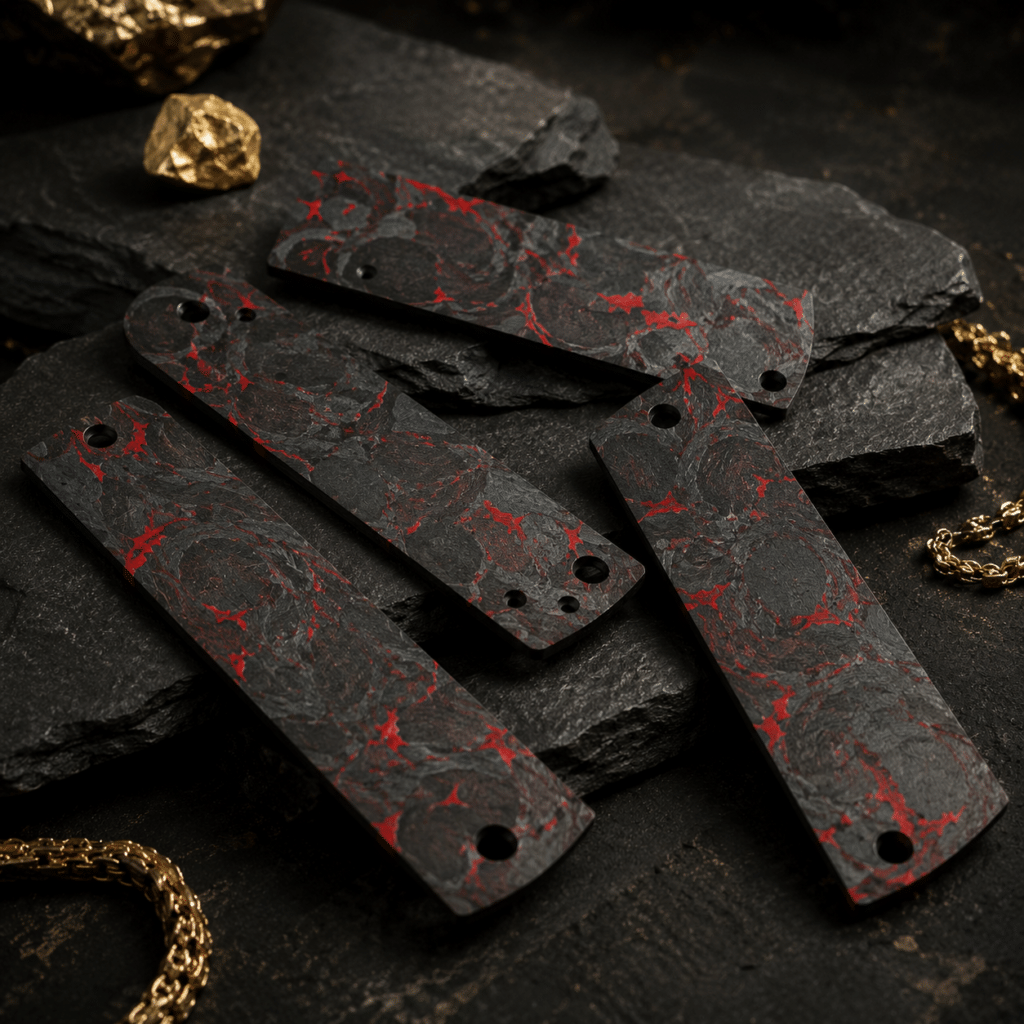
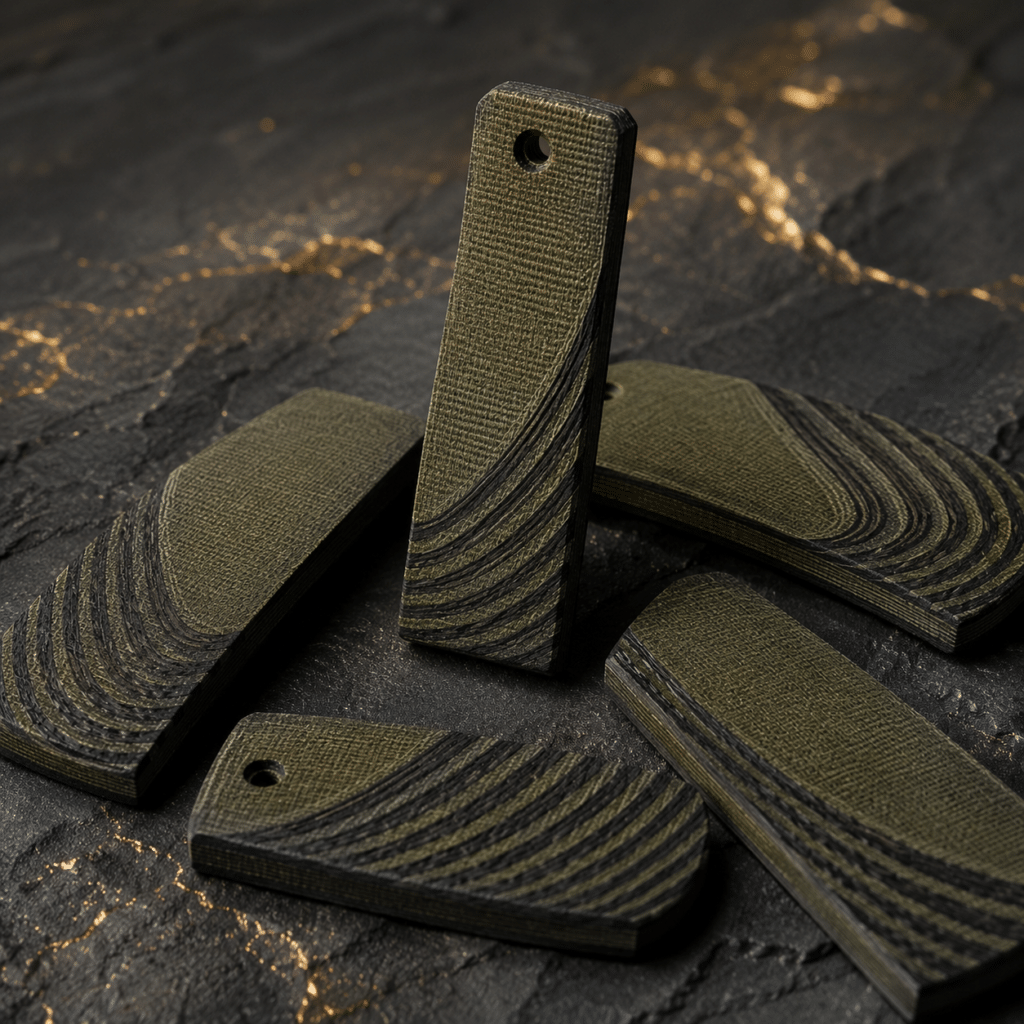
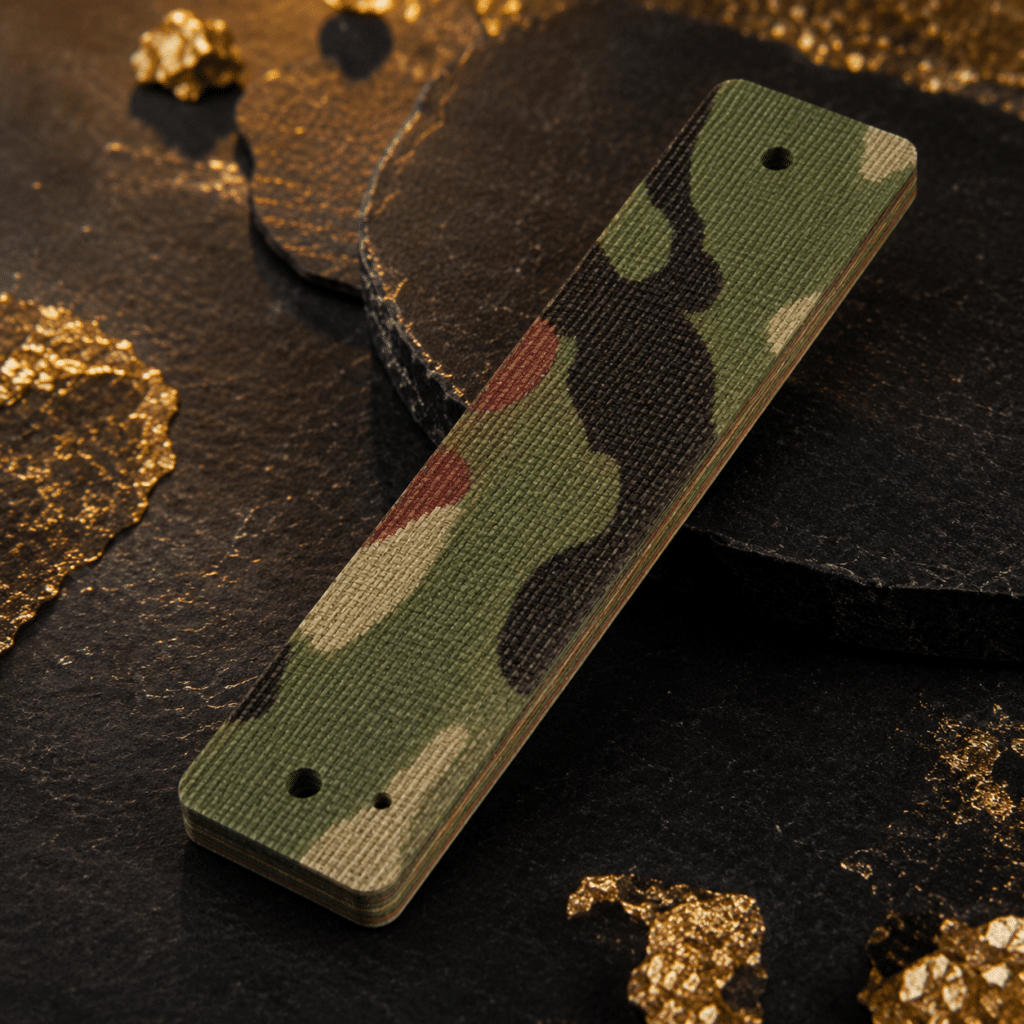
Two photographs seemed to show two colors “We approved olive green. These look brown.” The customer’s message included a photograph of finished handle scales beside an earlier sample image. The difference looked obvious on the screen. A product launch was approaching, and the customer wanted to know whether the wrong material had been supplied.In this […]
Looking beyond a single dimension when choosing a handle Two handles can share the same outline and still feel like different objects because their cross sections differ. A thin flat profile, a moderate rounded profile, and a fuller palm swell occupy the hand in different ways. Thickness also changes the object that must be carried […]
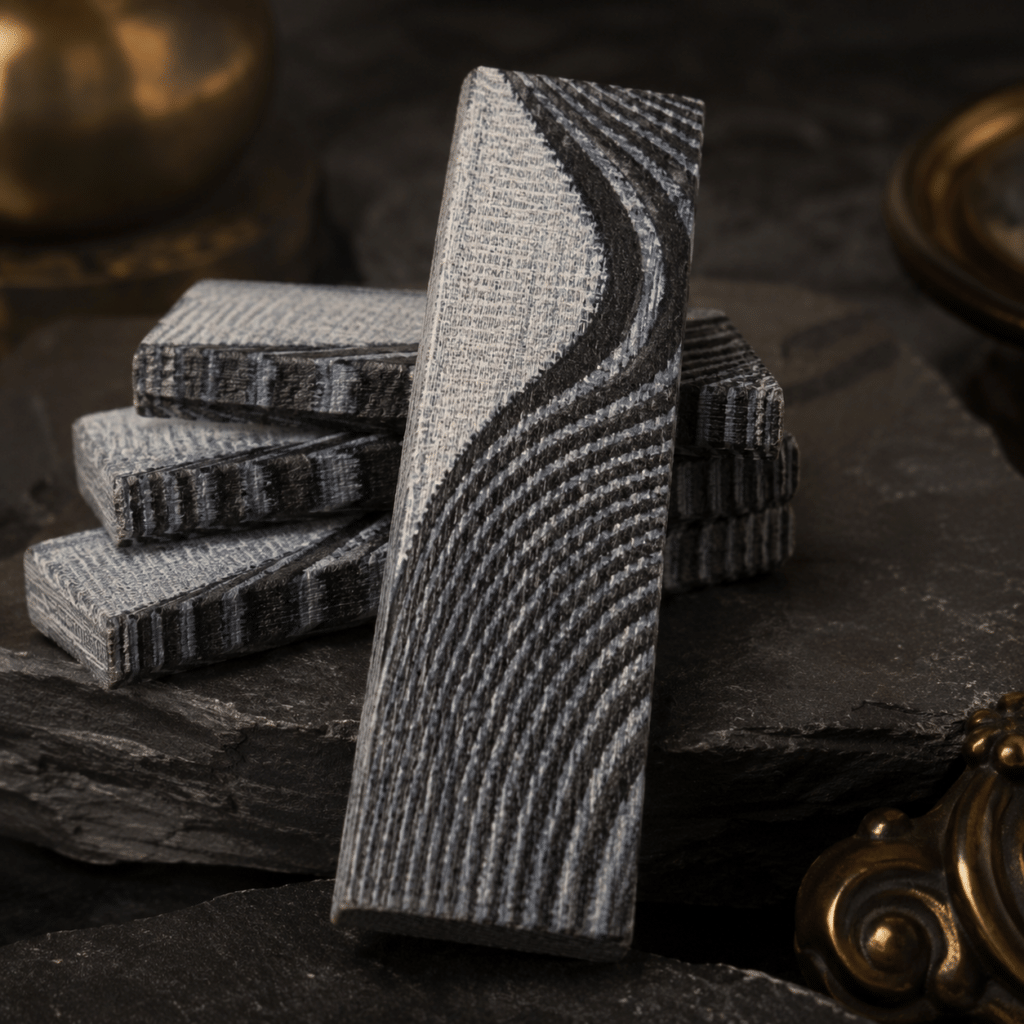
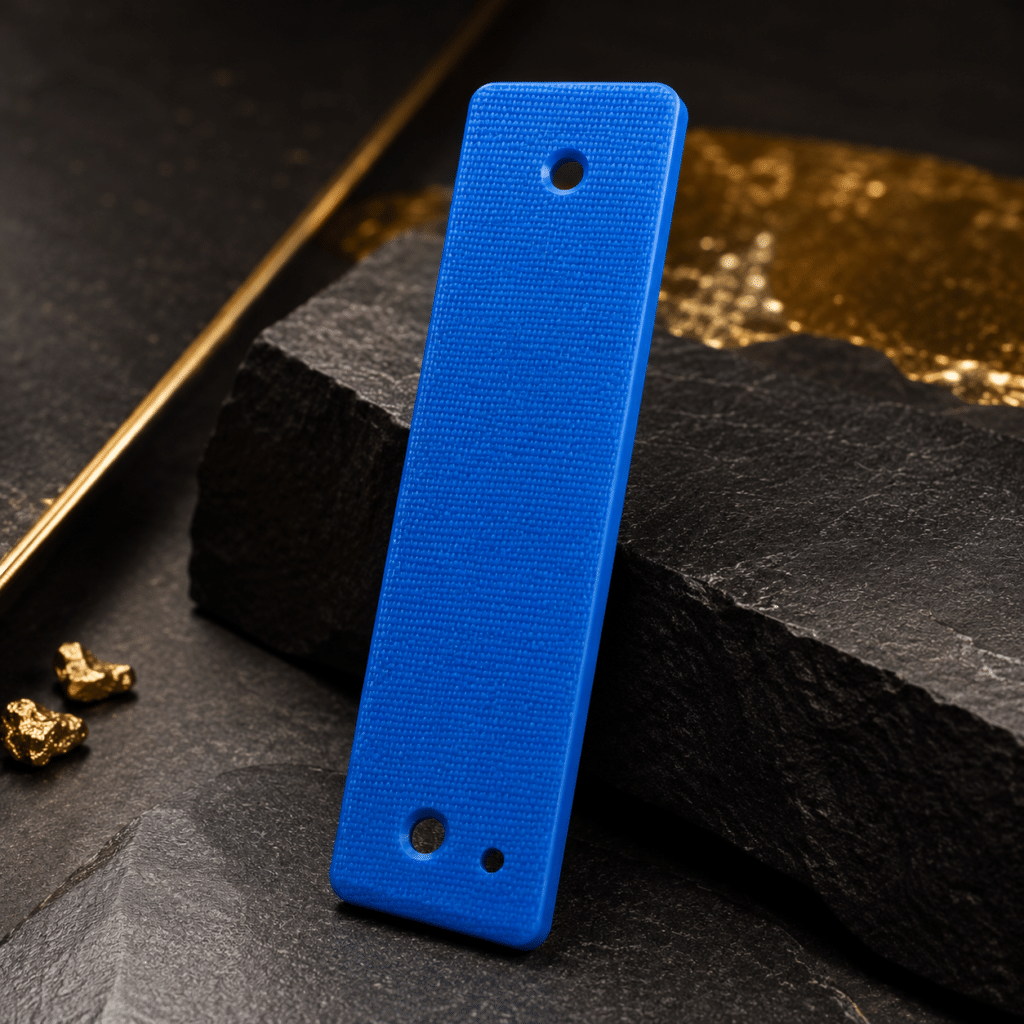
A close photograph of a Micarta handle can contain several patterns at once. There may be tiny crossing threads, broad bands around a curved edge, and repeated grooves along the face. Calling all of them cloth texture hides useful information. Some detail comes from the reinforcement, some from the way layers are exposed, and some […]

Right-to-repair discussions usually focus on electronics and appliances, but the design principle is relevant to knives: a worn, damaged or unwanted handle should not automatically end the life of a serviceable blade. Durable, replaceable handle scales turn maintenance into a planned feature. Key takeaway The most defensible material decision connects performance, traceable composition, manufacturing yield […]
REACH, RoHS and CBAM are often grouped together in supplier questionnaires, but they regulate different things. REACH addresses chemicals in the EU market. RoHS restricts specified substances in electrical and electronic equipment. CBAM prices embedded carbon in listed carbon-intensive imports. A knife-handle sheet is not automatically in scope of all three. Key takeaway The most […]
PFAS regulation is moving quickly across the United States and Europe. That does not mean every composite contains PFAS, and it does not justify a blanket PFAS-free claim for every G10, fabric laminate or carbon-fiber sheet. Formulations, release films, processing aids, coatings and supplier controls vary. Key takeaway The most defensible material decision connects performance, […]
There is no single ‘2026 tariff on Chinese knife-handle composites.’ The duty paid depends on the product’s HTSUS classification, country of origin, construction, whether an additional tariff program covers that code, and the customs value. Buyers should calculate landed cost at the SKU level. Key takeaway The most defensible material decision connects performance, traceable composition, […]
Reshoring is not always an all-or-nothing decision. Many knife makers gain resilience by moving cutting, machining, finishing or final assembly closer to customers while keeping qualified global sources for specialized laminate sheet. The best model depends on volume, lead time, equipment and traceability needs. Key takeaway The most defensible material decision connects performance, traceable composition, […]
A knife handle is small, but its environmental story is not simple. Fiber source, resin chemistry, service life, machining yield, repairability and end-of-life options all matter. The most responsible choice is rarely the material with the most natural-looking surface. It is the material that meets the application for a long time with the least avoidable […]
A single, universal carbon number for G10 or fabric laminate does not exist. Formulations, energy sources, sheet thickness, transport and machining yield vary by producer. A responsible comparison therefore explains the carbon drivers and asks suppliers for comparable data instead of inventing a kilogram-CO₂ figure. Key takeaway The most defensible material decision connects performance, traceable […]
 YOUDA COMPOSITE