 YOUDA COMPOSITE
A close photograph of a Micarta handle can contain several patterns at once. There may be tiny crossing threads, broad bands around a curved edge, and repeated grooves along the face. Calling all of them cloth texture hides useful information. Some detail comes from the reinforcement, some from the way layers are exposed, and some from the finished shape or surface treatment. Learning to separate those sources makes a color card easier to read and helps a buyer describe the handle they actually want.
Begin with the reinforcement
Micarta descriptions cover resin bonded materials with different reinforcement formats. For a fabric based handle grade, woven cloth is part of the internal construction rather than a print applied at the end. Paper based options need another description because there is no woven textile pattern to reveal. Manufacturer material guides identify these variations. Before asking whether a sample has the right texture, establish the actual reinforcement and grade instead of treating every product using the Micarta name as the same cloth material. Canvas and fine weave fabric can produce different visible scales of detail. Tufnol’s fine weave cotton laminate information connects reinforcement choice with machining characteristics and specific component requirements. That does not create a universal rule that the finest cloth is always best. For a handle, the buyer may be choosing a visual character as well as a construction. Ask for a representative close view, an ordinary overall view, and the supplied material description so those decisions remain connected.
Cloth detail has a small repeating scale
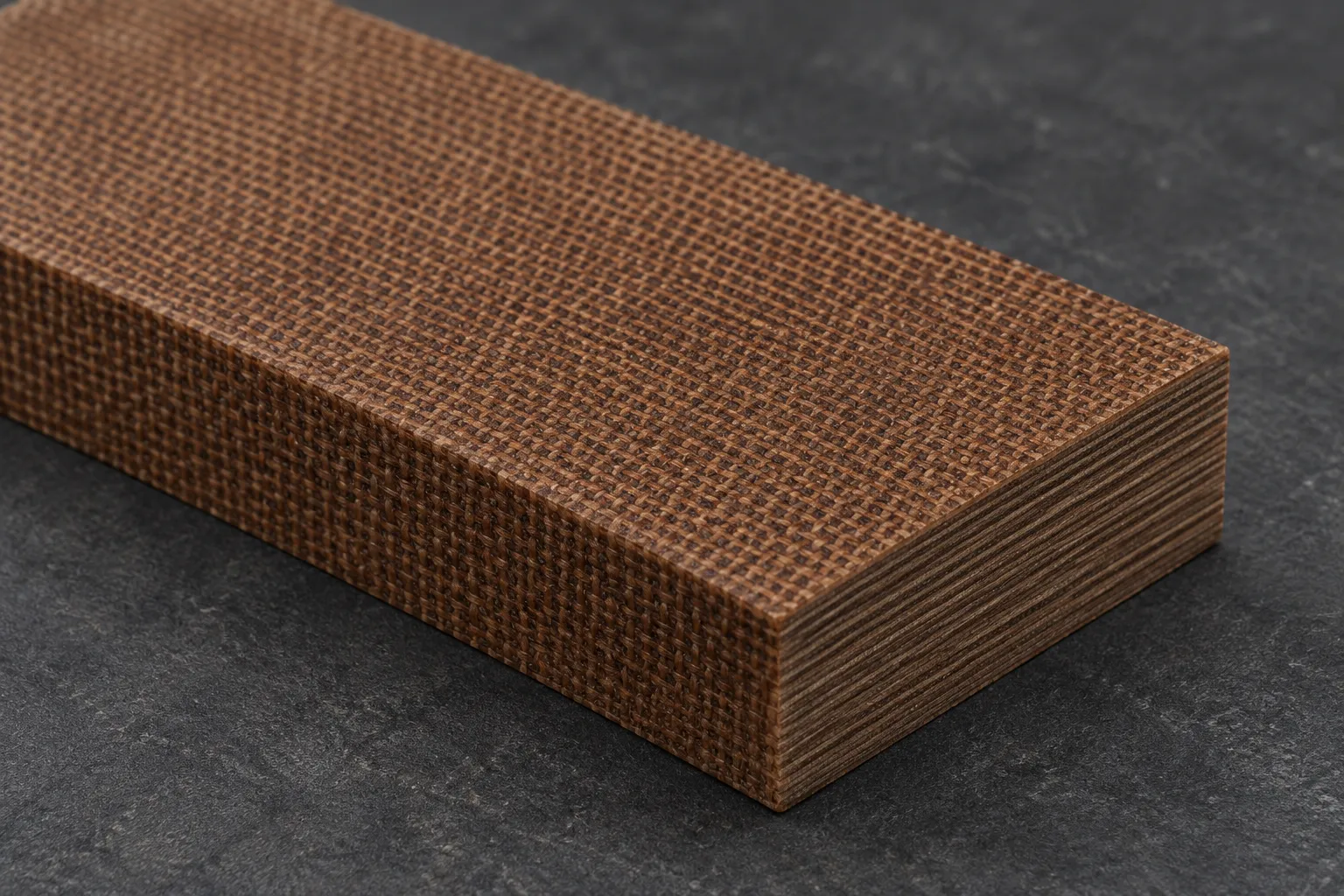
On a suitable exposed face, cloth detail can look like small crossings or a repeating textile rhythm. It belongs to the fabric itself. A photograph may exaggerate that rhythm through sharp side light or heavy magnification, so ask how large the pictured area actually is. A tiny crop filling a screen can make fine fabric look unusually coarse. The useful comparison keeps the viewing scale similar and identifies whether the sample is flat stock or a shaped component.Visible cloth and tactile roughness are not identical descriptions. The resin and finishing condition influence what the hand actually meets, even when the textile remains easy to see. A smooth satin face can show a woven pattern without having deep raised grooves. Conversely, a machined surface may feel strongly textured for reasons unrelated to the size of the cloth weave. Separate what the eye recognizes from what the hand feels before turning the photograph into a finish specification.Layer bands tell a larger scale story
A laminated fabric composite contains layers within its thickness. A cut edge or curved surface can intersect those layers and reveal bands or nested outlines. Those larger contours should not be confused with the small crossings within the cloth. They describe where the finished surface passes through the internal construction. A handle may therefore show a fine textile pattern inside a much broader band, with both details belonging to the same piece of material rather than to separate printed designs.Contour affects that appearance. A broad flat face may emphasize textile detail, while a rounded edge can reveal the layers more clearly. Two handles made from a related blank can look different if their shapes expose different regions. This is a useful explanation when a customer likes the colors in a raw sample but expects the exact bands of a finished reference. The material and the shape need to be discussed together rather than approved as independent visual promises.
Machining can add its own pattern
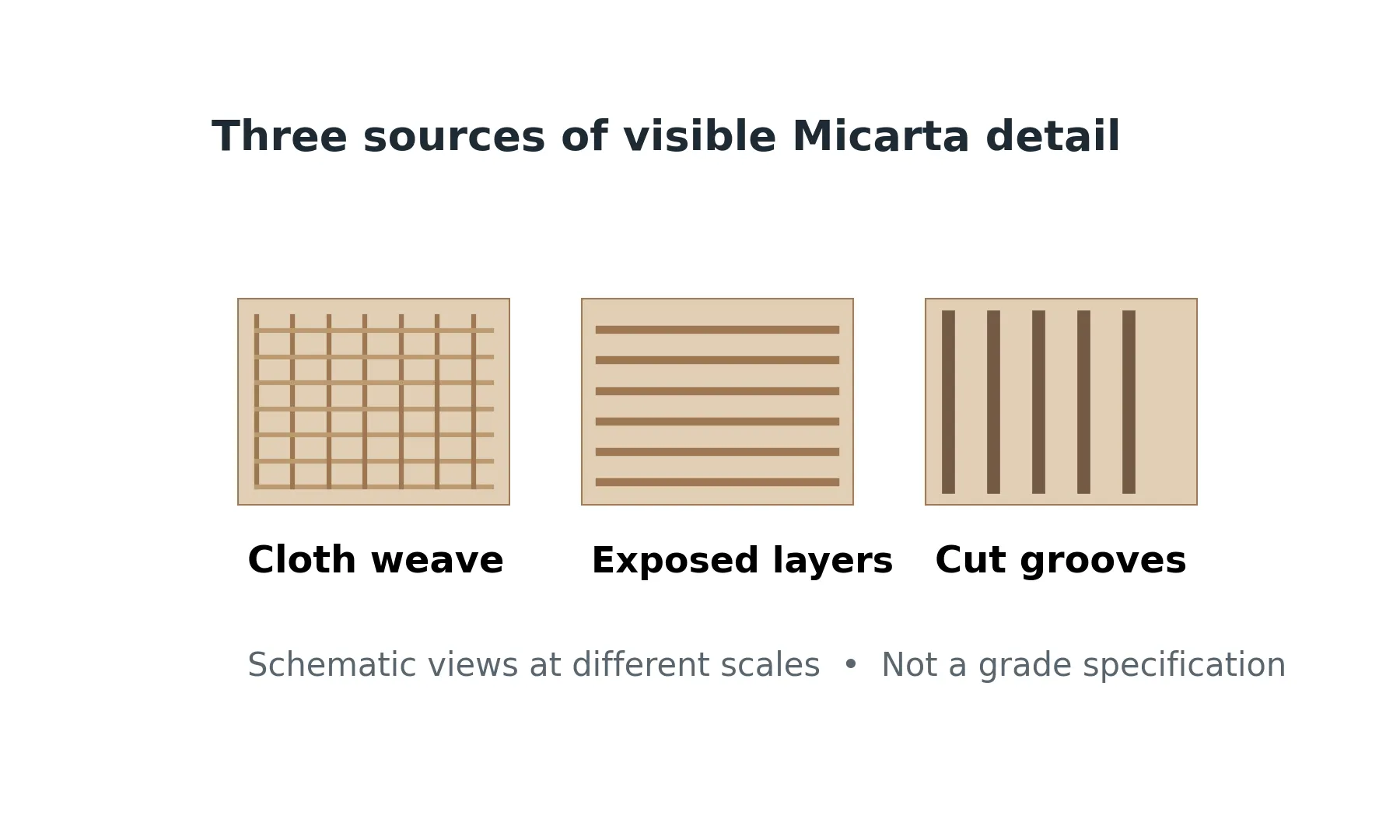
A maker may deliberately machine grooves, scallops, or another repeated form into a handle. The resulting pattern belongs to the surface geometry, even though the cuts may also expose the underlying cloth and layers. It is possible to see all three sources at once. Ask whether a prominent stripe in a reference is a material layer, a change in contour, or a recessed groove. That question often explains more than asking the supplier for the same texture without a close description.An intended machined pattern should also be distinguished from an unexpected surface mark. A photograph alone may not establish whether a line is part of the approved design or a finishing issue. Compare it with the drawing, sample, and supplier description before making that judgement. If the condition is unclear, request another view under neutral light. This keeps a discussion about appearance grounded without declaring every repeated line a defect or every visible mark a desirable texture.Color streaks deserve a separate description from the cloth weave as well. A long dark or bright region can follow the material construction without being one individual thread. If a reference contains broad colored lines and fine textile crossings, name both rather than describing everything as coarse cloth. Ask the supplier what creates the colored arrangement in that grade. This is more reliable than inferring the internal reinforcement direction from the longest visible stripe alone.Orientation needs a reference direction
A request for vertical stripes is incomplete until everyone agrees what vertical means. On a handle, it is often clearer to say that the visible lines should follow the long axis from the front toward the butt, or run across that axis. The image on a screen may be rotated, while the intended material direction remains the same. Add an arrow to the reference and name the physical direction. That turns a subjective word into a reviewable visual requirement.For cloth and layer patterns, the same arrow may describe different things. One arrow can identify fabric orientation, another the direction of colored bands, and another the layout of machined grooves. Do not assume they must coincide. If the reference combines several features, label the feature being discussed and ask the supplier or maker which parts are controlled by the stock and which are controlled during shaping. A short annotated reference can prevent several rounds of mismatched samples.A complete reference can use several views of the same sample: the face for textile detail, the cut edge for layer arrangement, and a shaped area for the effect of contour. Keep the sample identity attached to every image. Mixing a raw block from one grade with a finished handle from another can create an impossible target while making the page look visually consistent. One traceable sample tells a more useful story.Finish and lighting can change the impression
A polished surface, a satin surface, and a more textured finish can make related material look quite different. Reflections may hide fine cloth detail in one view and emphasize it in another. Ordinary consistent light and similar image scale are useful for a comparison, especially where a color card has been made from several photographic sessions. Ask for the intended finish explicitly. The material name alone does not tell the maker how the exposed surface should be delivered.A photograph of damp material should not be mixed casually with a dry sample when approving color. Likewise, an unusually bright highlight is not proof that the material has changed composition. Document the viewing condition before discussing a discrepancy. If consistency is important for repeated supply, retain an approved physical sample with its grade, finish, and date. That gives the buyer and supplier a better reference than an old screen image whose lighting is no longer known.
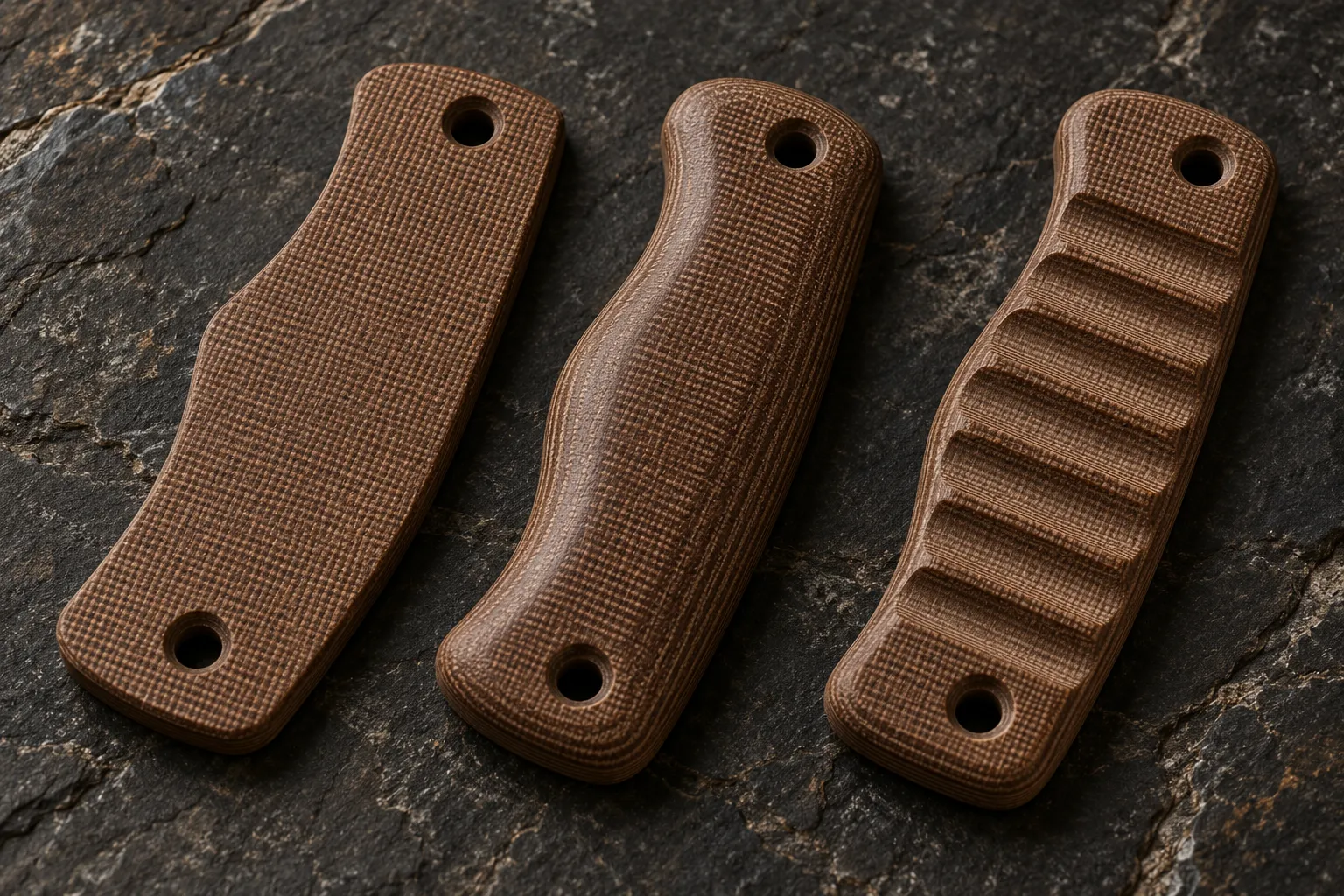
For English product copy, weave can identify the textile pattern, layer bands can describe exposed laminate boundaries, and machined grooves can identify deliberately cut recesses. Add a plain finish description separately. These terms help the reader distinguish material from geometry without promising a proprietary texture. They also make an enquiry easier to translate, because the supplier knows whether the customer is asking to change the reinforcement, the colored construction, or the finished surface.If two sides must be coordinated, define the intended match before production. Similar overall color, related layer placement and an aligned machined pattern are different requirements. A physical reference pair can communicate them more clearly than a close photograph of just one side.Compare the categories without mixing their
same way of reading a surface helps across our G10, Micarta, and carbon fiber categories. G10 can reveal glass fabric and colored layers; a woven carbon composite has another visible reinforcement arrangement. Those appearances do not make them the same construction as a cotton fabric Micarta option. Identify the material first, then describe the scale of the pattern and the finish. This allows a website to explain real differences rather than attaching the same cloth texture label to every composite.For an enquiry, describe the reinforcement where known, the desired color arrangement, the direction relative to the handle, and the intended finish. Include both a close view and a complete handle view, explaining which detail you want to preserve. A good Micarta reference separates weave, layers, and machining without losing the overall character. That clarity helps the supplier propose the right blank and helps the maker judge how it will look after the actual handle has been shaped.