 YOUDA COMPOSITE
Looking beyond a single dimension when choosing a handle
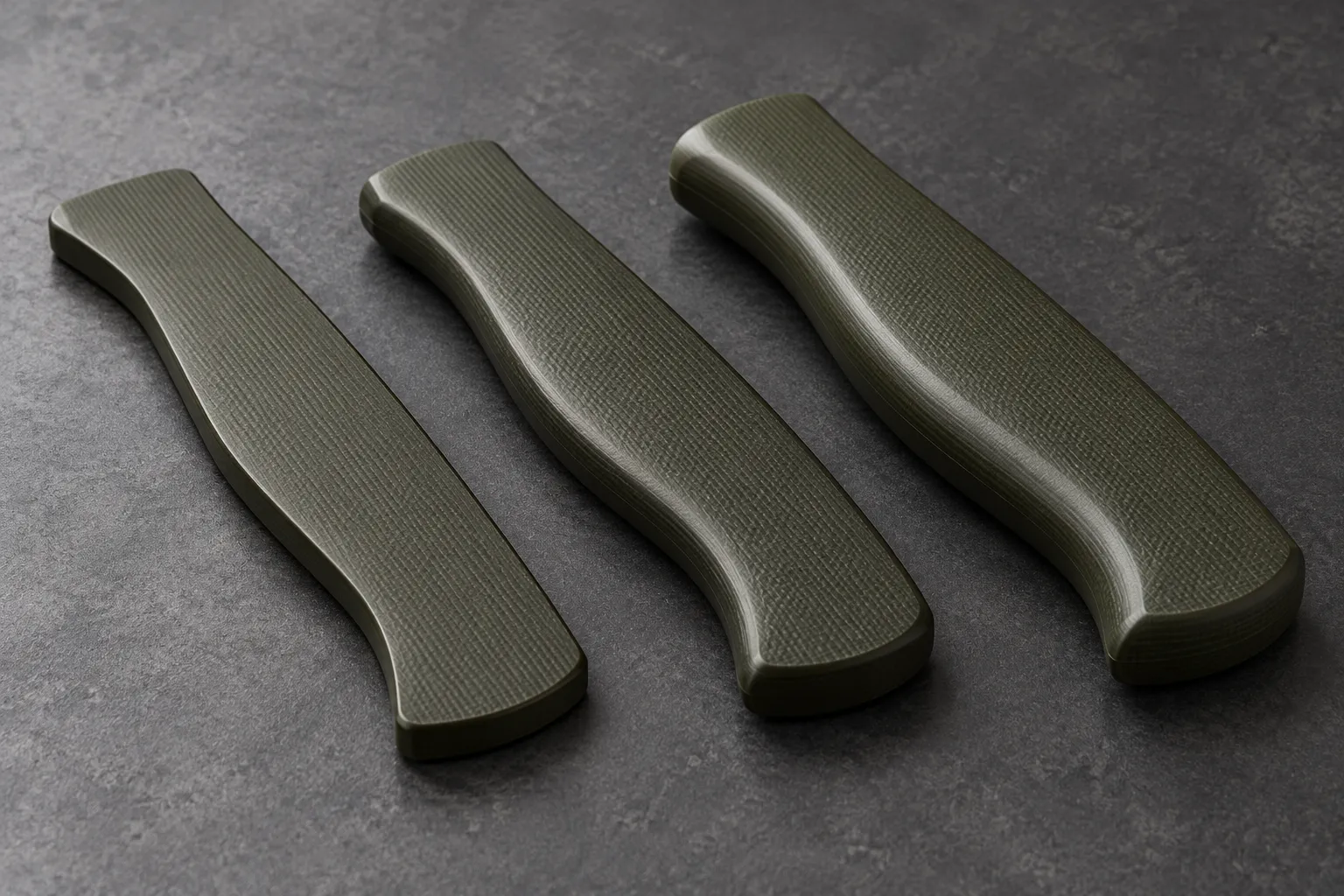
Two handles can share the same outline and still feel like different objects because their cross sections differ. A thin flat profile, a moderate rounded profile, and a fuller palm swell occupy the hand in different ways. Thickness also changes the object that must be carried in a pocket or sheath. There is no single best dimension for every user. A more useful comparison connects the stated measurement with the finished shape, the complete assembly, and the way the knife will normally be handled.
Define which dimension you mean
Handle length, the height of its side profile, and thickness across the two sides are different dimensions. A photograph taken from above often emphasizes the outline while hiding thickness. Even the phrase handle width can mean different things to different suppliers. Use a drawing or a clear side reference to identify the measurement. For a shaped handle, also state whether the number is taken at the thickest region or another specified location rather than assuming the entire object has one uniform section.Blank thickness is another separate description. Two stock scales may later be shaped, recessed, or fitted around another component. Their initial thickness does not equal the completed handle thickness. Metal tangs or internal structure, liners, fasteners, and the selected contour can contribute to the final result. When asking about a replacement scale, confirm both the supplied part dimensions and the intended finished assembly. A material sheet size on its own is not a complete fit specification.
A number cannot describe the whole section
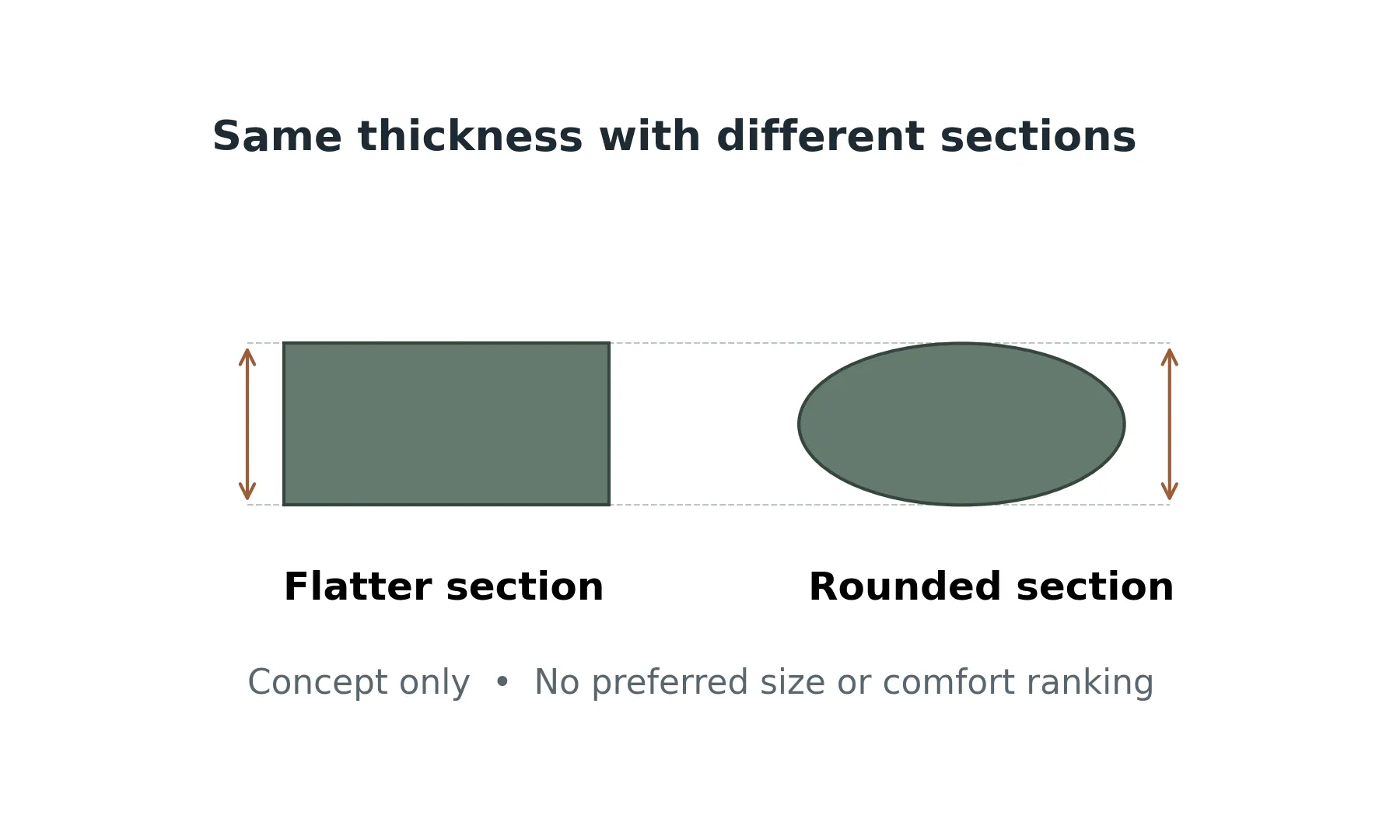
A rectangular section and an oval section can have the same maximum thickness while meeting the hand differently. Edge transitions, local swell, and the distribution of material around the perimeter influence the contact. That is why a comfortable rounded example cannot be reproduced simply by ordering a flat scale with the same largest dimension. Ask for a cross section or a representative finished sample when the shape matters. The dimension and the contour need to be evaluated together.The same point applies along the length of the handle. A design may be fuller near the palm and slimmer near the front, rather than keeping a constant thickness. A single catalogue number often hides those transitions. Look at the side and end views as well as the broad face, and ask which location the published dimension refers to. This helps distinguish a deliberate contour from a measurement disagreement between two people looking at different parts of the handle.
Hand contact is a relationship
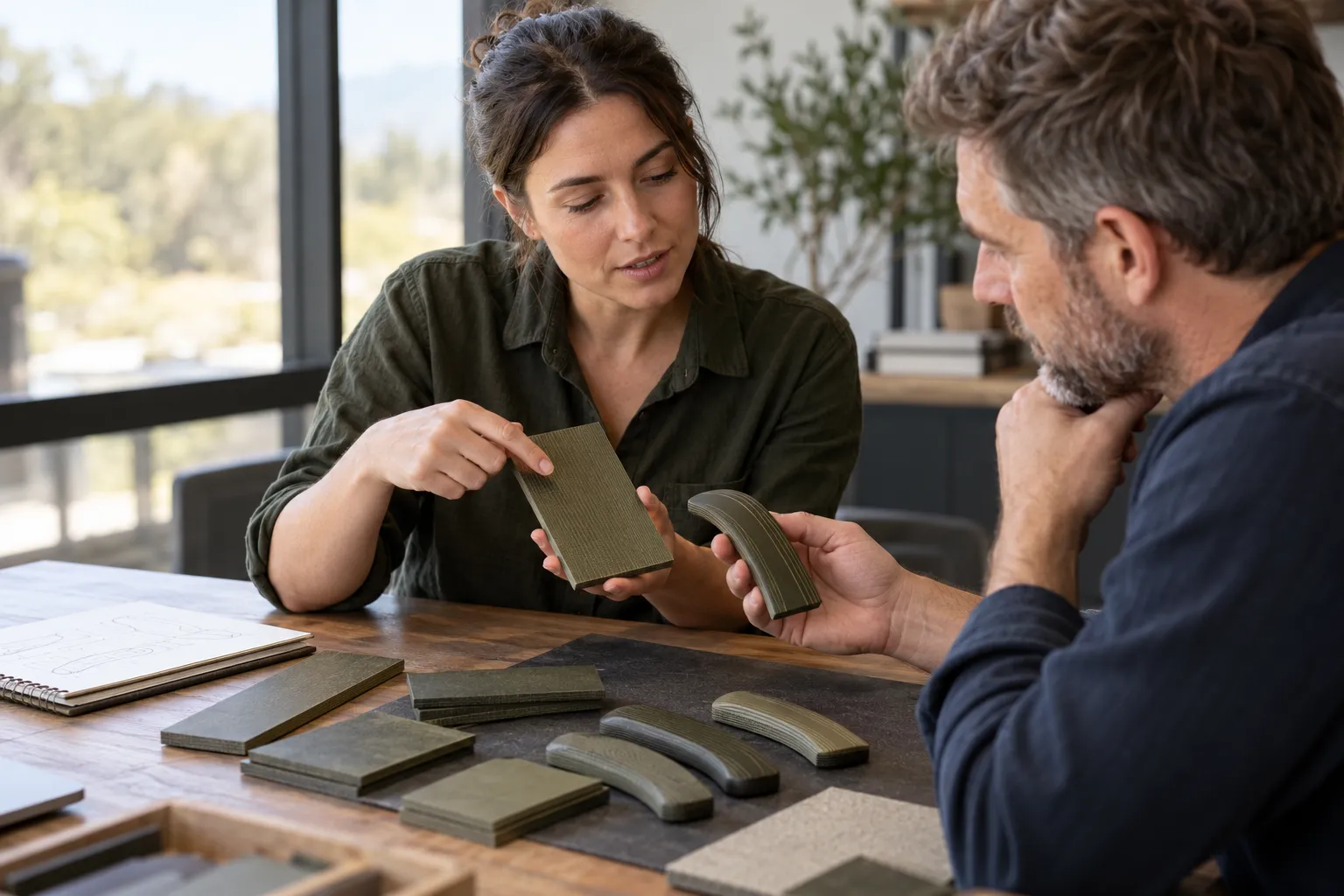
A fuller handle may suit one person’s preferred grip while another finds the same shape too large. A thin handle can feel unobtrusive in the pocket yet leave a different amount of space within the hand. These are observations about an actual user and object, not a reason to rank thick over thin or small over large. Hand size, preferred position, and the task all belong in the comparison. Describe what feels different rather than treating thickness as a universal comfort score.For a first fit review, a bladeless handle mockup allows the shape to be considered without a cutting test. Notice whether the fingers have room, where the edges meet the palm, and whether the user changes position naturally. Include the hardware and other contact features where the finished design requires them. A smooth solid block is useful for understanding volume but cannot demonstrate every aspect of a real assembled handle. Record the observations in the conditions that actually matter to the intended user.
Texture does not replace a suitable shape
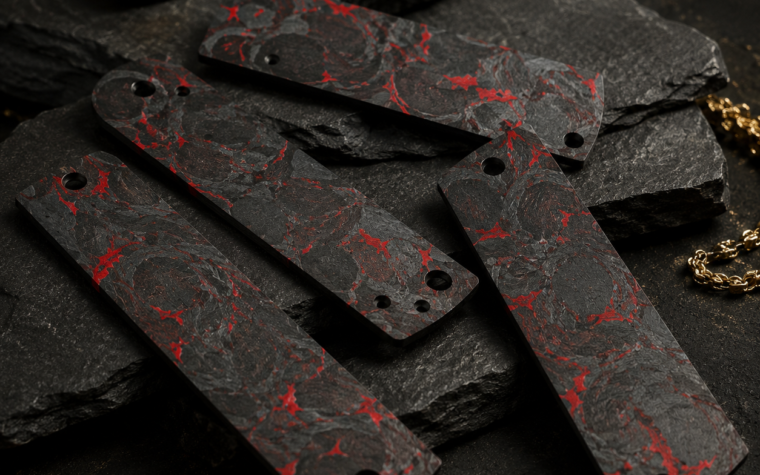
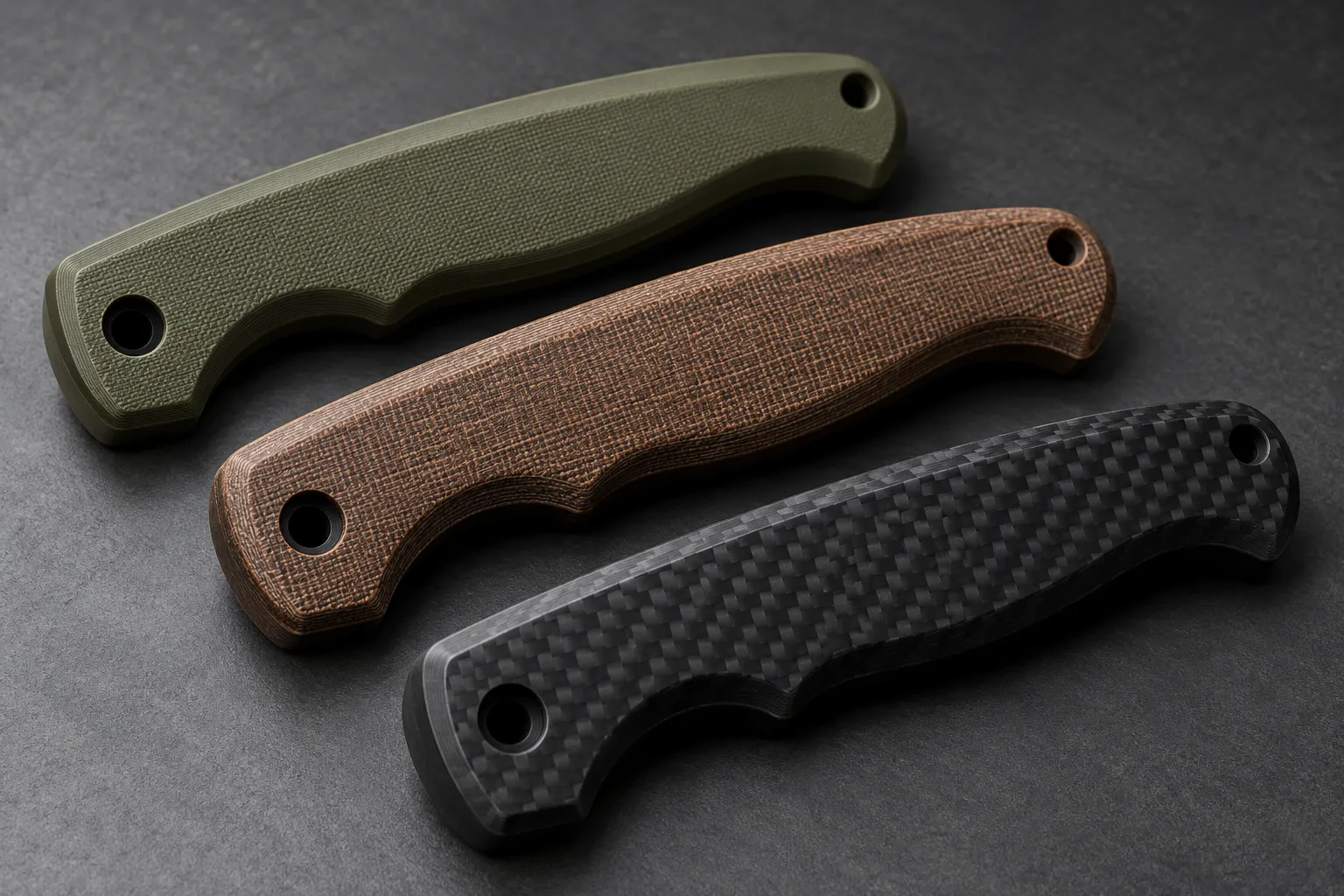
Surface texture can change the feel of a handle, but it does not make the underlying section disappear. A strongly patterned face on an awkwardly proportioned handle may still feel awkward to a particular user. Manufacturer handle guides discuss material and texture together with ergonomics and design goals. For a useful comparison, keep the finish similar while examining the section, then consider the desired surface. Otherwise, a dramatic texture can distract attention from the shape being evaluated. [1]Our G10, Micarta, and carbon fiber options can each be presented in different shapes and finishes. A material name does not prescribe the final handle thickness or determine which section a person prefers. A textured Micarta face, a fine G10 finish, and a satin carbon composite can all be considered with a particular contour. Compare representative finished options rather than using the reputation of one material to answer a dimension question that belongs to the design.Gloves introduce another practical condition without providing a universal sizing rule. The user may hold the same handle in a different way when wearing them, and controls or nearby features may feel different. If gloves are relevant, include them in a safe review of a representative bladeless mockup and record the observation. Do not turn one person’s preference into a claim that a certain thickness is suitable for every glove type or hand size.
Carry changes the comparison
For a folding knife, the complete carried object includes more than the scales. Clip arrangement, hardware, the closed outline, and neighboring pocket items contribute to the experience. A thinner scale may reduce one dimension without eliminating every protruding feature. Ask about the overall closed configuration and inspect a representative sample if pocket carry is important. The aim is to understand the complete object in use, not to assume that the smallest stock thickness must always be the easiest option to carry.A fixed blade carried in a sheath presents another set of interfaces. A change in handle volume or outline may affect how an existing retaining arrangement interacts with the knife. Ask the maker to review compatibility before changing a fitted component. A handle that looks similar from one angle is not necessarily an approved replacement. The proposed dimensions should be discussed with the complete product and its carrying arrangement, rather than treated as a purely cosmetic decision about the outside scales.
Thickness alone does not establish weight or strength
A thicker looking handle is not automatically heavier than every thinner one because material, internal construction, recesses, tang geometry, and hardware also contribute to mass. Likewise, a thin scale is not automatically inadequate for its intended role. Performance depends on the complete design and the evidence supporting it. If weight or a mechanical requirement is important, ask for the finished product information rather than assigning a conclusion to the visible cross section alone.The point is especially useful when comparing a compact G10 handle with a fuller Micarta or carbon fiber design. Different material categories do not provide a ready made ranking of finished knife balance. The blade and metal structure remain part of the whole object. Keep the product dimensions, weight, and preferred handling together in the comparison so that a change in thickness is evaluated for what it actually changes rather than for an imagined material advantage.
A drawing should also distinguish the maximum thickness from any local recesses or protruding hardware. If a quoted overall dimension includes a clip, say so. If it excludes that feature, preserve that note beside the number. This is especially useful when comparing stock parts from several suppliers, because different measurement conventions can make similar products look inconsistent. Agreeing the reference points first lets the team discuss an actual shape change rather than a difference in the way the ruler was placed.
Make a reference that can be repeated
A good handle reference includes the length, outline, relevant thickness locations, and cross section description, together with the desired material and finish. Add face, side, and end views rather than sending only an attractive overhead picture. If the requirement is a matched pair of scales, specify whether the dimensions describe each supplied piece or the finished assembly. This helps the supplier and maker review the same object and reduces ambiguity before a sample is produced.For repeat supply, retain the approved drawing revision and a representative finished sample. A request to make it slightly slimmer should identify which area and which constraints remain important. Let the maker evaluate the proposal rather than sanding or altering an assembled knife without understanding its construction. Dimensions that seem minor can interact with fasteners and fitted features. A controlled design change is easier to review when the starting reference has been documented clearly.
Choose a shape for the actual user
Handle thickness is useful information when it is connected to a real section and a real product. It helps explain both hand contact and the space occupied during carry, but it does not decide comfort, balance, or suitability by itself. When considering G10, Micarta, or carbon fiber, define the shape first and compare complete samples where possible. The better choice is the one whose documented construction and everyday handling suit the user, rather than the one that simply wins a thick or thin debate.