 YOUDA COMPOSITE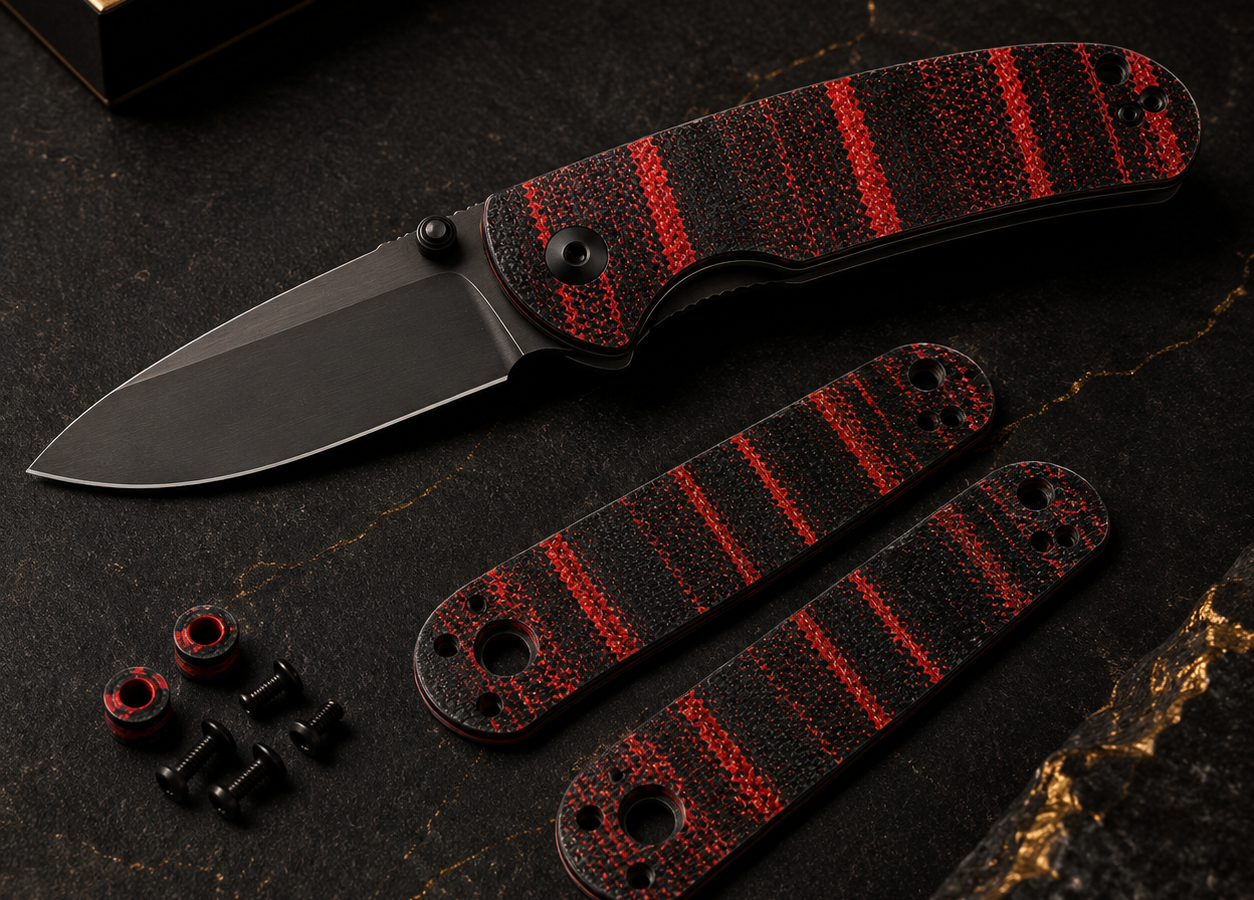
Wood and fabric laminate can both make excellent knife handles, but they solve different problems. Wood begins with a renewable biological resource; phenolic fabric laminate combines textile reinforcement with a thermoset resin to produce a stable engineered material. Sustainability depends on sourcing, processing, useful life and repair—not appearance alone.
Key takeaway
The most defensible material decision connects performance, traceable composition, manufacturing yield and service life. Environmental and compliance claims should be grade-specific, dated and supported by current documentation.
A note on the Micarta® name
Micarta® was developed in the United States by Westinghouse in the early twentieth century as an electrical insulating laminate and later became widely used in industrial and handle applications. Today, Micarta® is a registered trademark associated with Norplex-Micarta. Competitor products should be called phenolic fabric laminate, cotton-cloth laminate or linen laminate unless they are genuine branded material.
Wood: renewable, variable and beautiful
Responsibly sourced wood can offer renewable feedstock, low weight and a distinctive grain. Reclaimed material can also extend the life of an existing resource. Buyers should verify species, legal origin and forestry certification where relevant, especially for tropical hardwoods.
The trade-off is variability. Improperly dried or poorly stabilized wood can move, swell or crack. Oils and finishes may need renewal, and dishwasher or prolonged water exposure can cause failure. Stabilized wood improves consistency but adds resin, energy and processing, so it should not be described as simply natural.
Fabric laminate: stable, durable and not biodegradable
Phenolic fabric laminate offers repeatable thickness, strong grip, resistance to temperature changes and good dimensional stability. It uses cotton, linen or another fabric reinforcement, but the cured phenolic matrix is a permanent thermoset. It is neither compostable nor readily recyclable.
Its environmental case rests mainly on longevity, manufacturing yield and repairability. Uniform sheets are easier to nest, and offcuts may be usable for small scales, spacers, beads or test pieces.
Choose by use case
For a display knife or controlled indoor use, certified wood may be an excellent choice. For kitchen, hunting, marine, rescue or hard-use knives, a stable laminate can reduce swelling, cracking and premature replacement. For either material, avoid overbuilding: the lightest and simplest design that safely meets the requirement generally uses fewer resources.
Knife makers should publish care instructions. Wood benefits from controlled moisture and periodic finishing. Fabric laminate should be washed by hand and inspected around fasteners and adhesive joints. Both become more sustainable when the scales are replaceable.
Questions for suppliers
For wood, ask for species, country of harvest, chain-of-custody evidence, moisture content and stabilization chemistry. For laminate, ask for reinforcement type, resin family, sheet tolerance, formaldehyde information where relevant, chemical declarations and machining guidance. A supplier should distinguish verified facts from marketing language.
Buyer checklist
- Identify the exact grade, construction, color and production site.
- Define the end use, expected environment and required test methods.
- Request dated, product-specific declarations—not a generic company certificate.
- Compare usable-part yield and service life, not only price per sheet.
- Reconfirm legal requirements at the time and place of sale.
Frequently asked questions
Is wood always more sustainable than laminate?
No. Sourcing, drying, stabilization, service conditions and replacement rate can change the result.
Is Micarta made only from linen?
No. Genuine Micarta® includes multiple laminate constructions. Generic handle laminates may use canvas, linen, cotton cloth, paper or other reinforcement.
Which material is easier to maintain?
Phenolic fabric laminate is usually more dimensionally stable and needs less surface maintenance; wood offers a natural feel but may require oiling or refinishing.
Sources and update note
Regulations and market conditions can change. This article reflects information reviewed for August 2026 and is general procurement guidance, not legal advice.
© 2026 YD Composites. Prepared for website publication.