 YOUDA COMPOSITE
Right-to-repair discussions usually focus on electronics and appliances, but the design principle is relevant to knives: a worn, damaged or unwanted handle should not automatically end the life of a serviceable blade. Durable, replaceable handle scales turn maintenance into a planned feature.
Key takeaway
The most defensible material decision connects performance, traceable composition, manufacturing yield and service life. Environmental and compliance claims should be grade-specific, dated and supported by current documentation.
Repairability begins before production
A repairable knife uses accessible fasteners, repeatable hole locations and enough clearance for disassembly. Adhesive may still be necessary for sealing or structural reasons, but designers should consider whether permanent bonding is truly required. Hidden fasteners and proprietary geometry can improve appearance while making routine renewal difficult.
Keep CAD files, drilling jigs and material specifications for each model. Future replacement scales must match not only the outline but also countersinks, liners, tang curvature and compression around fasteners.
Why durable composites help
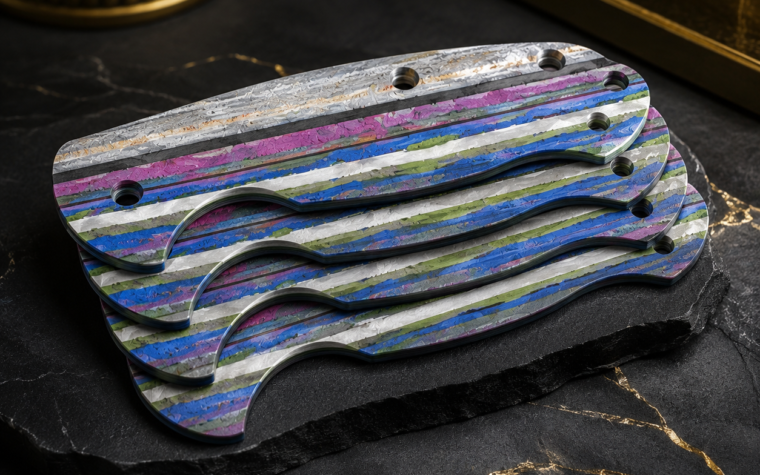
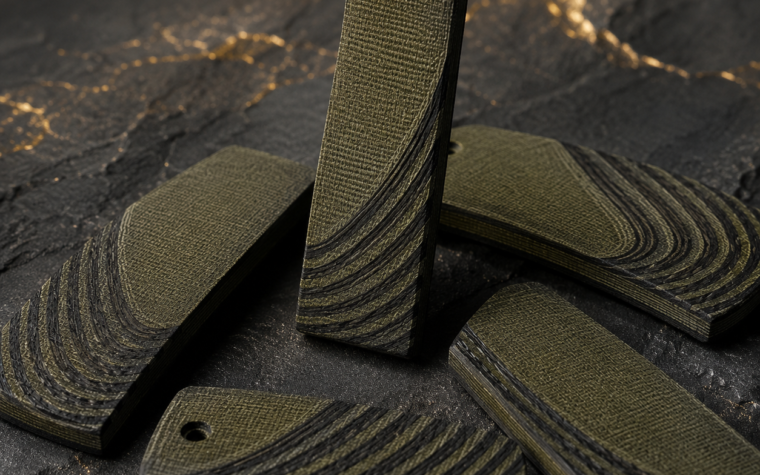
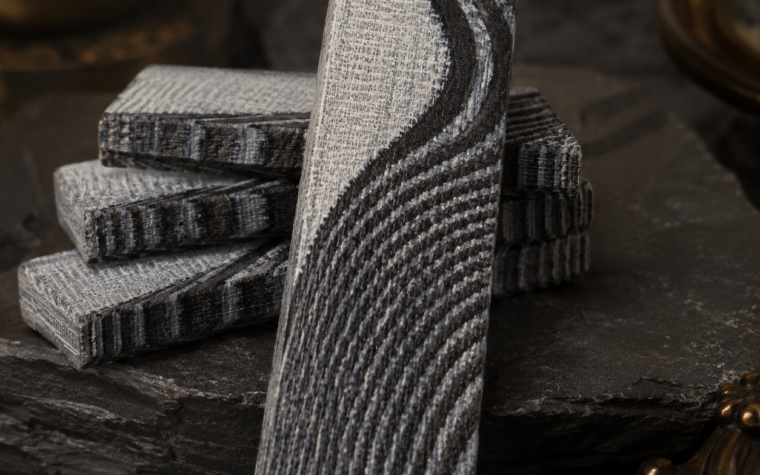
G10 is stable in moisture, strong and available in repeatable sheet thicknesses. Phenolic fabric laminate offers toughness and tactile grip. Carbon-fiber composite adds stiffness and low weight. These materials resist many conditions that damage untreated natural handles, but they are not indestructible. Impact, heat, chemicals and poor installation can still cause failure.
Authentic Micarta® is a registered trademark. When the brand identity of a fabric laminate is unknown, repair listings and invoices should use a generic description. This helps customers receive the material they actually ordered and avoids trademark misuse.
A repair-friendly product system
Publish the fastener type and tool required, provide torque guidance where appropriate, and explain whether thread-locking compound is used. Offer replacement scales as matched pairs and identify any liner or spacer included. A batch or color note is helpful because composite colors can vary between production runs.
Inspection guidance should cover cracks around holes, loose hardware, sharp exposed edges and contamination beneath scales. If damage affects the tang, locking mechanism or structural safety, refer the work to a qualified maker rather than presenting handle replacement as a universal DIY task.
Waste reduction beyond repair
Standard scale blanks let multiple models share inventory. Offcuts can become small handles, spacers or machining samples. Returnable fixtures, reusable protective sheets and right-sized cartons reduce production waste around the product.
Measure results: percentage of models with replaceable scales, replacement kits sold, products restored instead of discarded, average service interval and offcut reuse. These are credible, auditable claims.
Communicating the benefit honestly
Say ‘designed for replaceable handle scales’ only when the construction supports safe removal. Say ‘durable’ with a stated basis such as water resistance or impact testing. Do not claim that a thermoset composite is recyclable everywhere. Repair is valuable precisely because end-of-life recycling can be difficult.
Buyer checklist
- Identify the exact grade, construction, color and production site.
- Define the end use, expected environment and required test methods.
- Request dated, product-specific declarations—not a generic company certificate.
- Compare usable-part yield and service life, not only price per sheet.
- Reconfirm legal requirements at the time and place of sale.
Frequently asked questions
Are pinned handles repairable?
They can be repaired by a skilled maker, but they are less convenient than screw-fastened scales and may require destructive removal of the old material.
Can replacement scales use a different material?
Often yes, if thickness, strength, hole geometry, liners and balance remain suitable.
Does right to repair require a particular material?
No. It is primarily a design and support approach. Stable sheet materials can make repeat replacements easier.
Sources and update note
Regulations and market conditions can change. This article reflects information reviewed for August 2026 and is general procurement guidance, not legal advice.
© 2026 YD Composites. Prepared for website publication.