 YOUDA COMPOSITE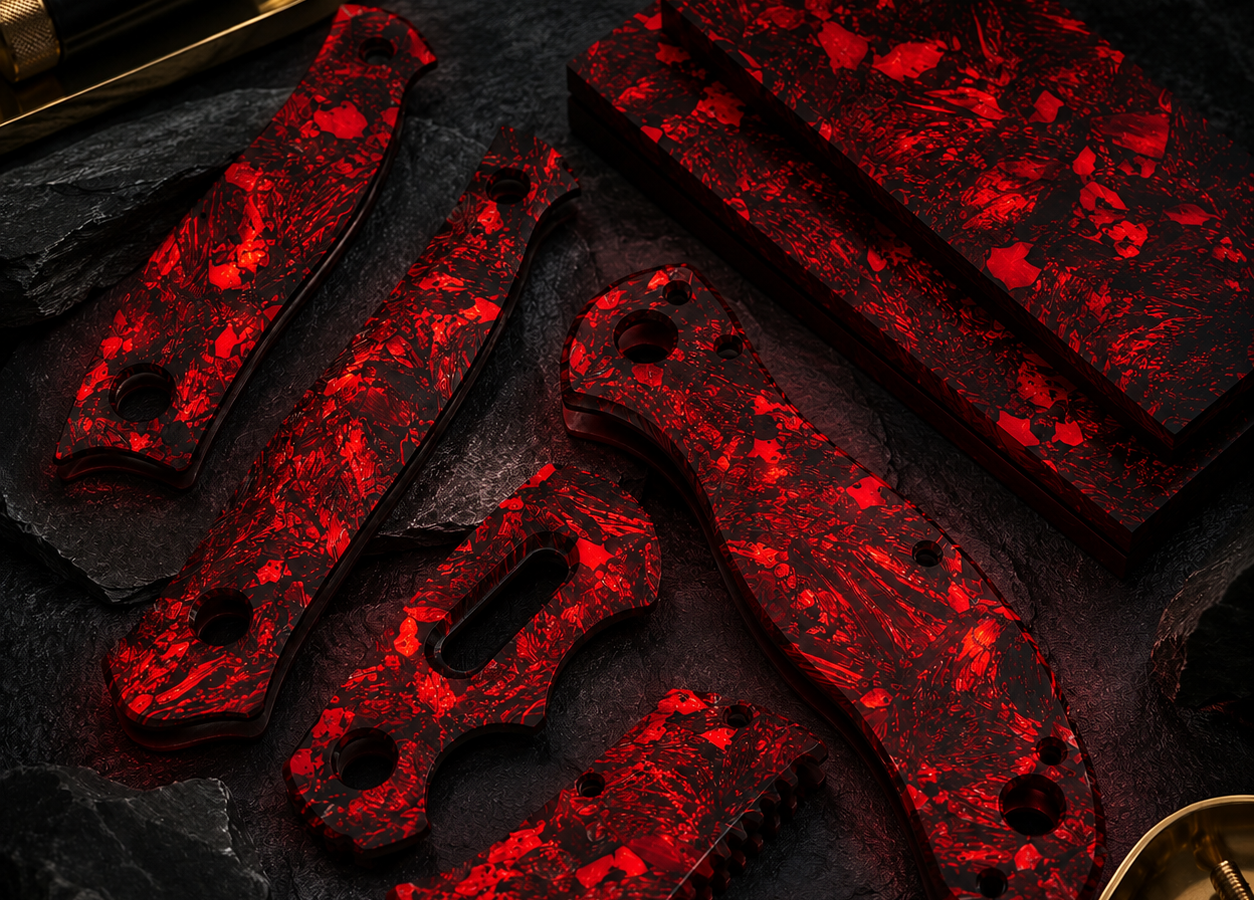
A knife handle is small, but its environmental story is not simple. Fiber source, resin chemistry, service life, machining yield, repairability and end-of-life options all matter. The most responsible choice is rarely the material with the most natural-looking surface. It is the material that meets the application for a long time with the least avoidable waste.
Key takeaway
The most defensible material decision connects performance, traceable composition, manufacturing yield and service life. Environmental and compliance claims should be grade-specific, dated and supported by current documentation.
Start with a life-cycle view
Sustainability claims should be tied to a defined boundary. A cradle-to-gate comparison covers raw materials and manufacturing; a cradle-to-grave comparison also considers years of use, maintenance and disposal. Without the same boundary, two carbon figures cannot be compared fairly.
For knife makers, the most useful practical indicators are certified or traceable feedstocks, resin and chemical documentation, expected service life, defect rate, cutting yield, replacement frequency, and whether the scales can be mechanically removed and replaced.
How the main materials compare
Wood can be renewable and visually distinctive, especially when it comes from responsibly managed forests or verified reclaimed stock. Yet species, drying, stabilization and local humidity strongly affect performance. Cracking, movement or water uptake may shorten service life in demanding use.
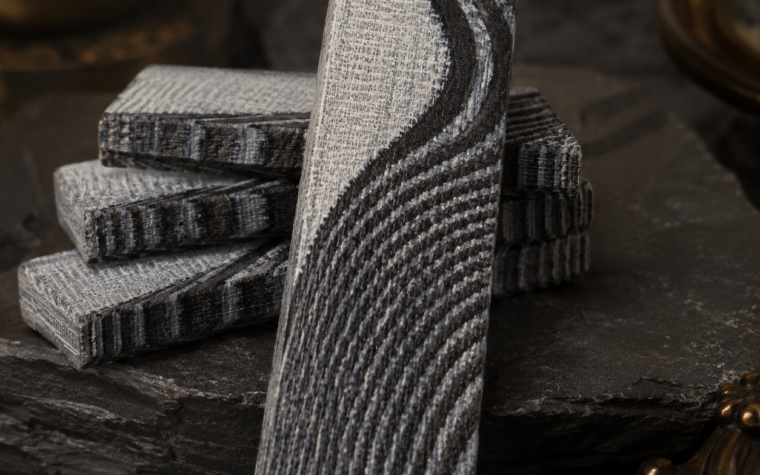
Cotton- or linen-reinforced phenolic laminate uses a substantial textile reinforcement and provides excellent dimensional stability and grip. Authentic Micarta® is a registered trademark associated with Norplex-Micarta; similar materials from other producers should be described generically as phenolic fabric laminate, cotton-cloth laminate or linen laminate—not as branded Micarta® unless authorized.
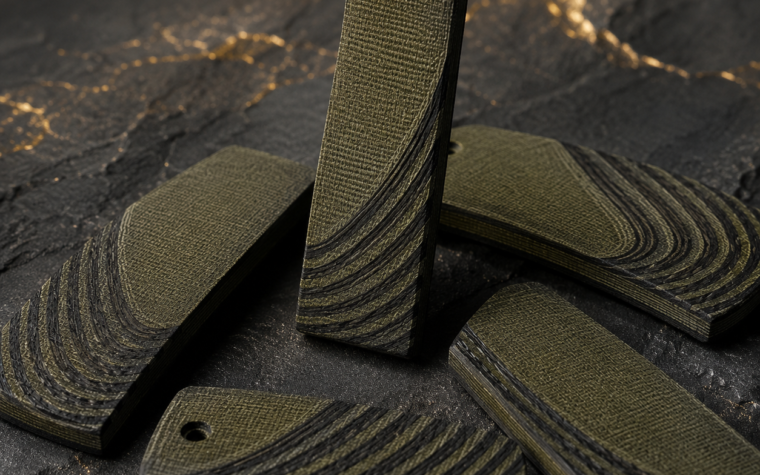
G10 combines woven glass fiber with epoxy resin. It is energy- and resin-intensive, but strong, water-resistant and durable. Carbon-fiber composite can deliver high stiffness at low weight and a premium appearance, although fiber production is energy-intensive and recycling routes remain limited. Neither material should be marketed as inherently green; durability and efficient use are the credible sustainability arguments.
A practical selection framework
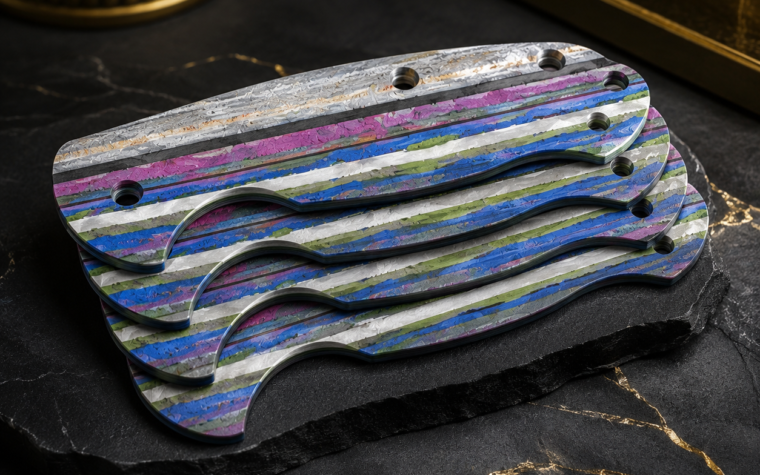
Choose wood for controlled environments, verified sourcing and a natural aesthetic. Choose phenolic fabric laminate when grip, toughness, dimensional stability and a textile appearance matter. Choose G10 for wet service, impact resistance, repeatable machining and broad color options. Choose carbon fiber when low weight, stiffness and premium positioning justify its higher embodied impact and cost.
Request a material declaration, SDS or safety information, applicable REACH/RoHS evidence, fiber and resin identification, and consistent batch data. Ask the supplier how sheet sizes, thickness tolerances and flatness affect nesting and scrap. A lower scrap rate can outweigh a small difference in the nominal price per sheet.
Design and production choices that reduce waste
Use common scale thicknesses, nest left- and right-hand parts together, keep machining allowances realistic, and validate toolpaths before a full run. Mechanical fasteners make later scale replacement easier than permanent bonding alone. Dust extraction and suitable PPE are essential when machining thermoset composites; collected dust should be managed under local waste rules.
At ydcomposites.com, buyers can compare G10, carbon-fiber and fabric-laminate formats before requesting cut sizes. The useful conversation is not simply ‘Which material is green?’ but ‘Which verified grade will deliver the required life with the least scrap?’
Buyer checklist
- Identify the exact grade, construction, color and production site.
- Define the end use, expected environment and required test methods.
- Request dated, product-specific declarations—not a generic company certificate.
- Compare usable-part yield and service life, not only price per sheet.
- Reconfirm legal requirements at the time and place of sale.
Frequently asked questions
Is Micarta biodegradable?
No. Micarta® and generic phenolic fabric laminates are thermoset composites. Natural-fiber reinforcement does not make the cured composite biodegradable.
Is G10 recyclable?
Conventional mechanical or chemical recycling is limited and location-dependent. Reuse, long service life, accurate nesting and repair are more realistic near-term strategies.
Which material has the lowest carbon footprint?
There is no universal answer without supplier-specific data and a common life-cycle boundary. Wood may have a favorable feedstock profile, while durable composites may reduce replacement frequency.
Sources and update note
Regulations and market conditions can change. This article reflects information reviewed for August 2026 and is general procurement guidance, not legal advice.
© 2026 YD Composites. Prepared for website publication.