 YOUDA COMPOSITE
Confused about the best knife handle materials for various knives? Check our complete guide to pick wood, G10, micarta, carbon fiber handles by usage, balance durability and grip needs for custom knives.
The best knife handle materials match knife usage, working environment and hand grip demands rather than picking the most expensive options. For daily carry knives, lightweight and moisture-resistant materials like G10 and stabilized wood work best; heavy-duty outdoor knives need sturdy micarta and carbon fiber; collectible craft knives prioritize natural wood and transparent resin. This beginner-focused guide sorts out mainstream handle materials, helping you make cost-effective, targeted choices without tricky industry knowledge.
1. Handle Material Definition
Knife handle materials refer to raw materials used to produce knife handle scales, responsible for wrapping knife tangs, providing holding force and beautifying knife outlook. All mainstream handle materials fall into two categories: natural organic materials and synthetic industrial materials. Natural materials include solid wood, stabilized timber and natural resin; synthetic materials cover G10, micarta, carbon fiber and engineered colored resin. Unlike blade metal materials, qualified handle materials focus on grip comfort instead of sharpness, and require stable physical structure to fit long-term assembly.
2. Core Material Performance
Eligible knife handle materials share four essential performances to adapt to diverse knives. First, environmental stability: resisting humidity, temperature change and daily abrasion to avoid deformation. Second, anti-slip texture: possessing natural or polished surface friction to prevent slipping with sweaty hands. Third, structural toughness: bearing squeezing and torsion force, not breaking during cutting or chopping. Fourth, machinability: allowing simple cutting, drilling and finishing, convenient for knife modification and custom production. Premium materials balance all four indicators, while low-grade materials usually have obvious flaws in stability or toughness.
3. Material Advantages and Limitations
3.1 Natural Handle Materials
Natural wood and stabilized wood top the list in visual performance, featuring unique natural grain and warm touching feeling, greatly boosting knife ornamental value. They deliver soft grip, easing hand fatigue during long-time holding, and are easy to polish into smooth edges. However, raw wood has obvious drawbacks: it swells in humid weather, shrinks in dry seasons, and is prone to mildew and cracking. Even stabilized wood still needs regular maintenance, and cannot stand long-term soaking or heavy impact.
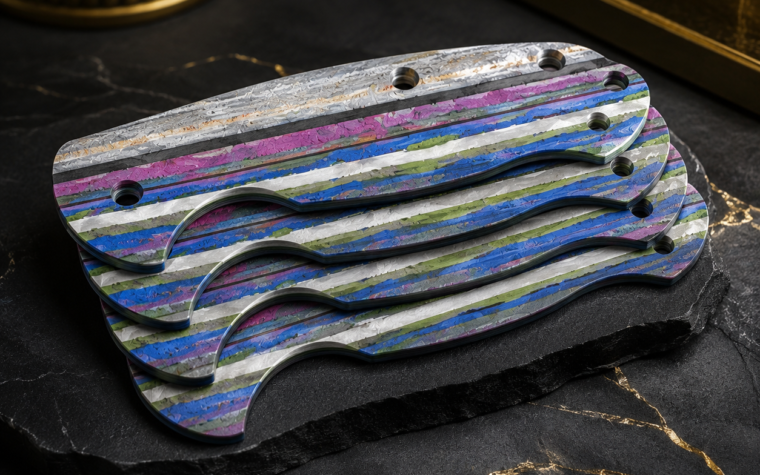
Natural resin boasts diverse colors and transparent texture, ideal for personalized craft knives. It has steady weight and moderate friction, but suffers from low heat resistance, easy surface scratching and poor load-bearing capacity.
3.2 Synthetic Handle Materials
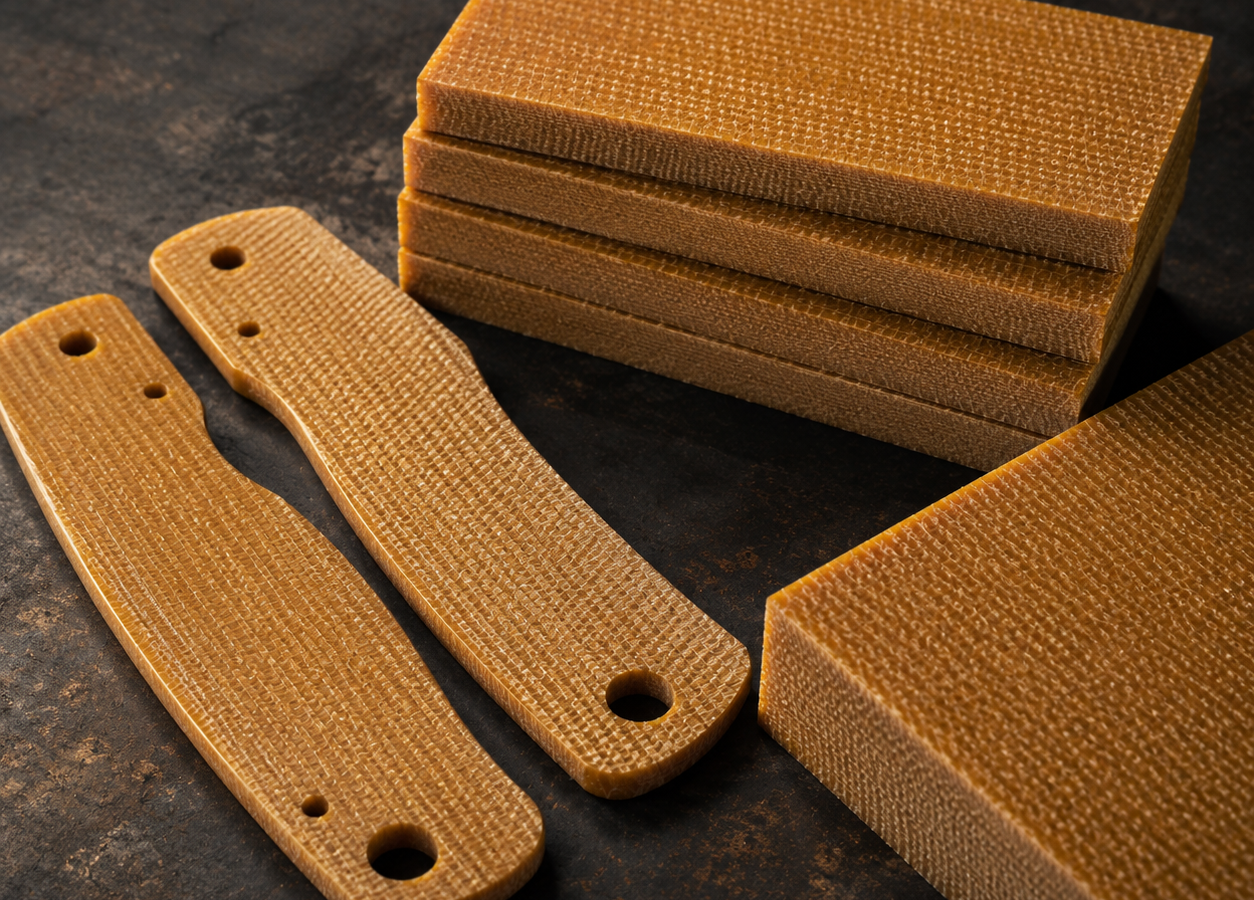
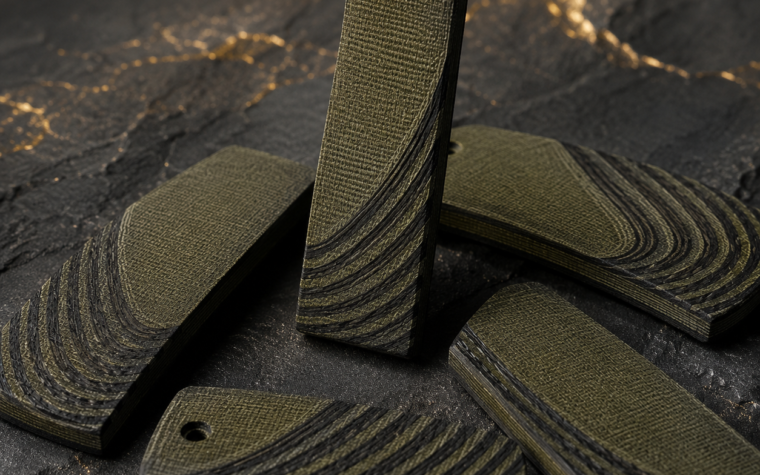
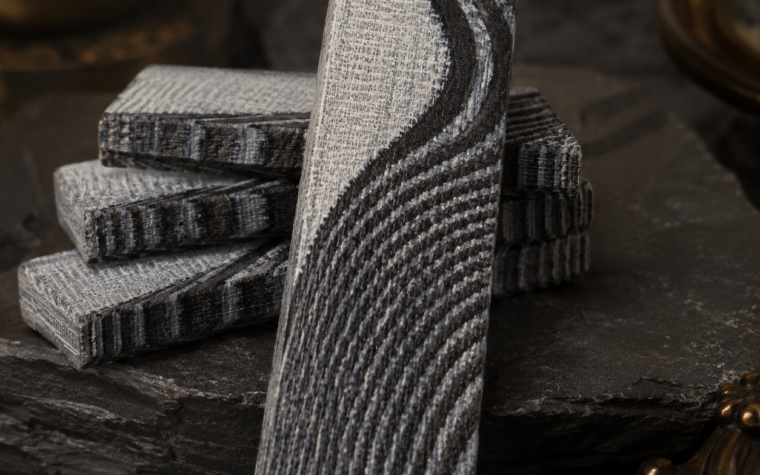
G10 and micarta are recognized as all-round synthetic materials, owning outstanding weather resistance and abrasion resistance. They never absorb moisture, will not deform or mildew, and tolerate high-strength cutting and outdoor harsh environments. Meanwhile, they support various surface treatments to create matte or textured grip. The limitation lies in cold touching feeling, lacking natural texture aesthetics, and costing slightly higher than ordinary wood.
Carbon fiber features ultra-light weight and extreme toughness, bringing delicate and high-end handle touch. It keeps balanced knife weight perfectly, yet its biggest downside is high procurement cost, and rigid surface causes poor anti-slip effect without extra texture treatment.
4. Practical Application Scenarios
Daily carry pocket knives mostly adopt thin G10 and stabilized wood handles. Such materials balance lightweight and waterproof performance, fit long-time pocket storage, and avoid handle deterioration from sweat. Household kitchen knives prefer treated solid wood and matte micarta, which bring skin-friendly grip and resist oil stain erosion.
Outdoor bushcraft and survival knives choose thick micarta and carbon fiber. These materials resist mud, rain and collision, adapting to wild high-intensity use. High-end collectible custom knives mainly use rare grain wood and gradient resin, focusing on appearance and collection value instead of heavy-duty usability. Retro vintage knives usually match original solid wood materials to restore classic outlook.
5. Material Selection Suggestions By Knife Type
5.1 Selection For Beginners
New knife makers and hobbyists shall prioritize micarta and basic G10. They have stable quality, low processing failure rate, need little daily maintenance, and fit almost all knife styles. Avoid raw natural wood and pure carbon fiber at the initial stage: wood requires complicated maintenance, while carbon fiber is hard to cut and polish, raising processing difficulty.
5.2 Selection Based On Usage Environment
For humid coastal areas or rainy outdoor activities, pick fully synthetic materials, abandon ordinary wood to stop mildew and warping. For dry indoor use and craft display, natural wood and resin are totally acceptable. For high-temperature cooking and barbecue scenarios, choose heat-resistant micarta, never use resin materials that may melt under heat.
5.3 Budget-oriented Advice
Low-budget production: ordinary stabilized wood and entry-level G10, cost-saving and practical. Mid-budget customization: textured micarta and colored resin, balancing beauty and durability. High-end customization: carbon fiber and rare grain wood, for collection and high-value handmade knives.
6. Material Matching Specification Guidance
We sorted out easy-to-follow matching rules without professional data, helping avoid mismatched materials. For slim lightweight knives: adopt low-density thin G10 and translucent resin, control overall handle weight to reduce hand burden. For heavy-duty thick-blade knives: select high-density micarta and thick carbon fiber, enhance handle torsion resistance.
For frequently used daily knives: prioritize abrasion-resistant synthetic materials, extend service life and cut maintenance work. For display-only knives: prioritize texture and color, select natural wood and gradient resin regardless of wear resistance. Never match ultra-heavy carbon fiber with thin portable blades, which will break overall knife balance.
7. Frequently Asked Questions
Q1: What is the most durable knife handle material?
A1: Micarta ranks first in comprehensive durability, followed by G10. Both resist water, abrasion and impact, adapt to all daily and outdoor scenarios. Carbon fiber has stronger toughness but poor scratch resistance, while natural wood has the lowest comprehensive durability.
Q2: Does expensive handle material mean better grip?
A2: Definitely not. Gorgeous high-price carbon fiber has slippery surface, while affordable textured micarta delivers far better anti-slip grip. Grip performance depends on surface texture and material hardness, not material cost.
Q3: Can I replace handle materials for old knives casually?
A3: No. You need to match material density and thickness with original knife tang. Over-heavy materials will cause top-heavy blades, while ultra-light thin materials will lead to unstable holding, damaging original knife balance.
Q4: Which material needs the least daily maintenance?
A4: G10 needs zero daily maintenance. It is waterproof, oil-proof and anti-mildew, requiring only simple surface cleaning. Micarta needs slight regular dust removal, and natural wood demands the most careful maintenance.
Insights / Material Guide
Best Materials for Different Knives
Confused about the best knife …
Need Material Support?
Discuss your material and machining requirements.
Send us the material type, dimensions, quantity, application and destination for a practical quotation.