 YOUDA COMPOSITE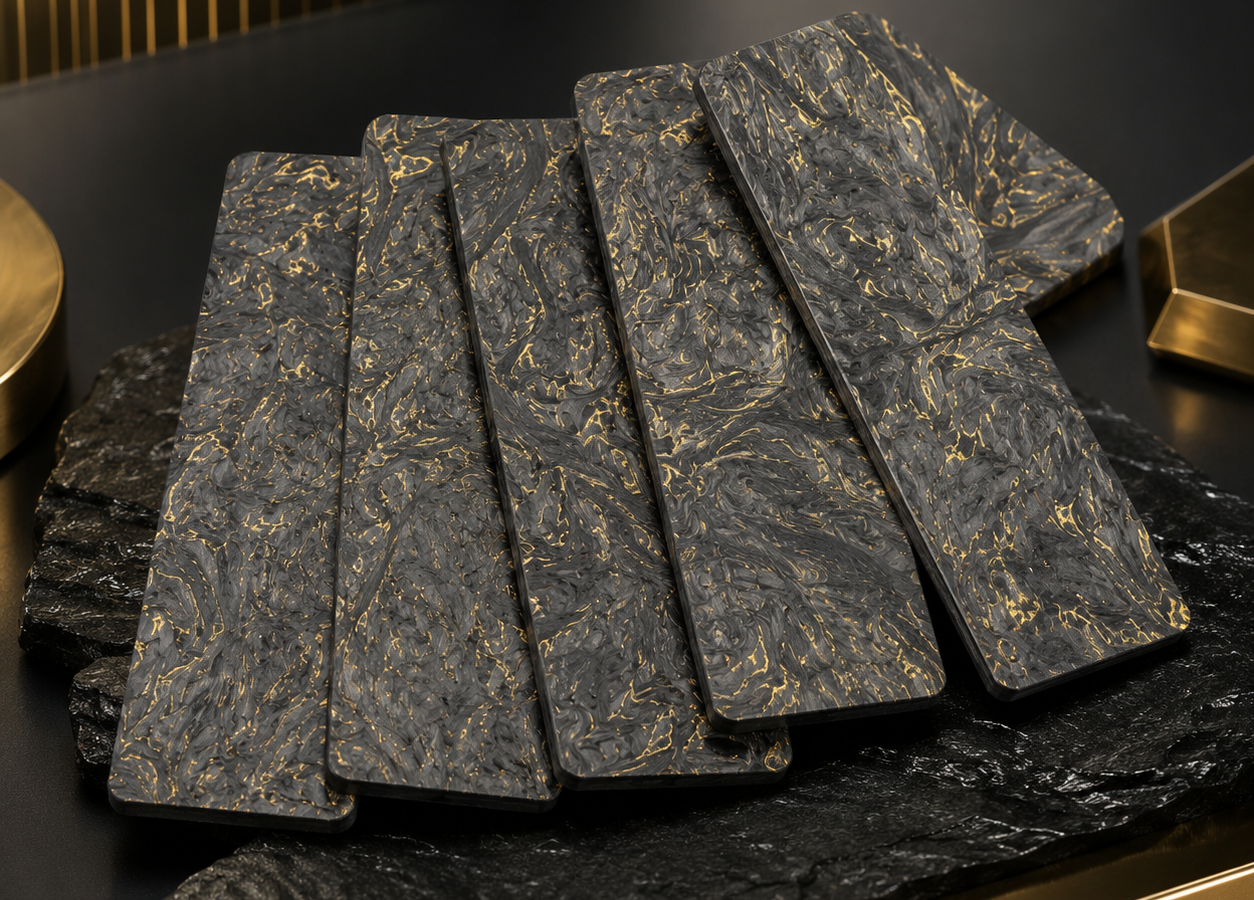
Confused between carbon fiber and micarta for knife handles? Compare their performance, pros, usage and cost, pick the better handle material for custom, outdoor and collectible knives.
Carbon fiber and micarta are two top synthetic knife handle materials, both durable and weather-resistant but fit totally different usage scenarios. Carbon fiber features ultra-light weight, rigid texture and high-end outlook, ideal for lightweight and collectible knives; micarta delivers balanced grip, outstanding shock resistance and affordable cost, perfect for heavy-duty outdoor and daily knives. This unbiased comparison breaks down all key traits, helping knife makers pick suitable materials without misleading marketing claims.
- Material Definition
Carbon fiber is a high-strength composite handle material made of woven carbon yarns bonded with cured epoxy resin. It retains slim woven texture on the surface, with compact internal structure, exclusively produced for high-strength industrial and craft accessories. Knife-grade carbon fiber blanks are refined for hand processing, removing overly hard industrial fillers to fit cutting and drilling.
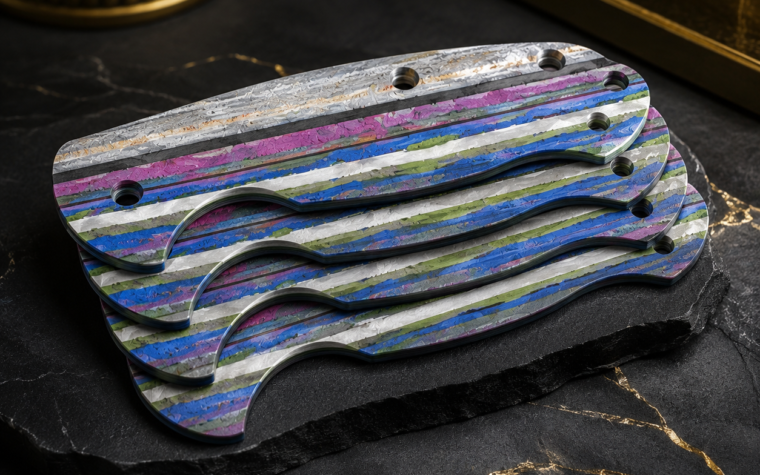
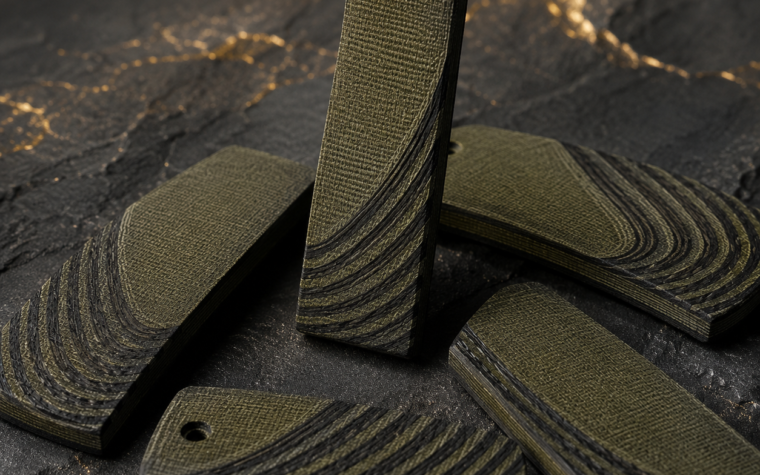
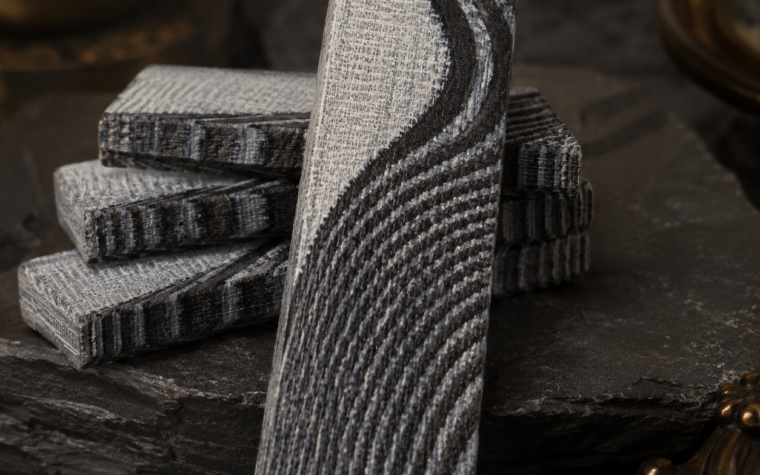
Micarta is a layered composite material pressed with linen, canvas or paper fabric soaked in thermosetting resin. It adopts high-temperature compression molding technology, forming dense layered texture. Unlike carbon fiber with fixed woven patterns, micarta can be made into solid color, gradient and marble texture. It is a mature, cost-friendly handle material widely used in knife manufacturing for decades.
- Core Material Performance
Carbon Fiber Core Performance: It owns extreme tensile strength and ultra-low density, ranking top among mainstream handle materials in weight reduction. It features slight thermal conductivity, rigid structural hardness and zero water absorption. The material keeps stable under sharp temperature changes, and will not bend or deform under long-term torsion. However, its surface density is uneven, leading to subtle processing difficulty during polishing.
Micarta Core Performance: It has excellent vibration damping performance, easing recoil during chopping and heavy cutting. It owns moderate density and uniform internal texture, bringing steady hand feel. Micarta has great friction adaptability; rough micarta boosts anti-slip ability, while polished micarta achieves smooth touch. Its only weak point is minor thermal expansion under sustained high temperature.
- Advantages and Limitations
3.1 Carbon Fiber Pros and Cons
The biggest advantage of carbon fiber is lightweight rigidity. It can cut nearly 30% handle weight compared with equal-size micarta, greatly optimizing knife balance. Its sleek woven texture delivers minimalist, premium visual effect, highly favored by knife collectors. Besides, carbon fiber never fades, corrodes or absorbs moisture, requiring almost zero daily maintenance.
Its obvious limitations include high procurement cost and poor machinability. Carbon fiber wears down drill bits and saw blades rapidly, raising DIY processing difficulty. Its smooth original surface lacks friction, causing slippery grip with sweaty hands without secondary texture treatment. Moreover, carbon fiber will produce fine flying dust while cutting, which needs extra protective operation.
3.2 Micarta Pros and Cons
Micarta’s greatest strength is all-round usability. It is easy to cut, drill and finish, friendly for beginner knife makers, and compatible with all kinds of processing tools. It provides soft, shock-absorbing grip to relieve hand soreness during long-time use, and supports diverse color customization. With stable raw material supply, micarta has much lower unit price than carbon fiber.
Micarta’s drawbacks focus on weight and aging risk. Equal-size micarta is heavier than carbon fiber, which weakens portable knife balance. Long-term exposure to extreme high temperature will make surface resin aging, causing slight yellowing and hardening. In addition, colored micarta may fade slightly after years of outdoor sun exposure.
- Practical Application Scenarios
Carbon fiber is mainly applied to lightweight EDC pocket knives, high-end collectible custom knives and ultra-light outdoor survival knives. Crafters prefer carbon fiber for slim, delicate knife works that pursue balanced weight and high-grade appearance. It is also widely adopted for limited-edition customized knife accessories to improve product added value.
Micarta dominates heavy-duty usage scenarios, including bushcraft knives, butcher knives, camping utility knives and daily kitchen knives. Its shock-absorbing grip relieves hand pressure during chopping and splitting work. Retro handmade knives and mass-produced cost-effective knives also prioritize micarta, for its stable output and low modification cost.
- Material Selection Suggestions
5.1 Selection Based on Maker Experience
Beginner knife makers should choose micarta firstly. It has uniform texture, low processing failure rate and tolerates operation errors, saving tool loss and material cost. Experienced crafters can try carbon fiber for advanced customization; it is better to use wear-resistant drill bits and do dust protection during processing to avoid operational troubles.
5.2 Selection Based on Usage Purpose
Pick carbon fiber if you make portable EDC knives, display collection knives or lightweight outdoor knives, focusing on outlook and portability. Choose micarta for daily working knives, heavy-load cutting tools and frequent-use household knives, prioritizing grip comfort and cost performance. For humid working environments, both materials are qualified, with no obvious quality gap.
5.3 Budget-oriented Advice
Low and medium-budget knife making: stick to micarta, it balances quality and cost, with abundant texture options. High-budget customization and artifact-level knife production: adopt carbon fiber to upgrade overall texture and lightweight performance. Avoid blind replacement of micarta with carbon fiber for daily knives, which brings unnecessary cost waste.
- Material Matching Specification Guidance
We sort out practical matching rules without professional data, convenient for buyers to place orders directly. For slim handle customization: select thin carbon fiber blanks, control overall handle thickness below 4mm to reduce end weight. For thick heavy-duty handles: adopt medium-thickness linen micarta, enhance shock resistance and grip stability.
For post-processing specification: carbon fiber needs low-speed drilling to reduce tool abrasion, and forbids deep surface carving. Micarta supports all-round polishing, carving and hole expansion, with no processing limitation. For color matching: carbon fiber mainly keeps original black woven tone; micarta supports solid color, gradient and dyeing customization with richer visual effects.
- Frequently Asked Questions
Q1: Which material is more durable for long-term use?
A1: Their service life is almost equal under daily use. Carbon fiber has stronger structural hardness, while micarta owns better anti-shock ability. Carbon fiber is harder to damage under collision, yet micarta is not easy to break after long-time repeated squeezing.
Q2: Can I replace micarta with carbon fiber directly on old knives?
A2: Not recommended. Carbon fiber is much lighter, direct replacement will change original knife balance, resulting in top-heavy or tail-heavy hand feel. You need to slightly increase carbon fiber thickness to offset weight gaps.
Q3: Which one needs less daily maintenance?
A3: Carbon fiber needs zero maintenance, resisting sunlight, water and grease erosion. Micarta needs simple surface cleaning after heavy outdoor use, to avoid dust stacking in layered gaps and slow aging.
Q4: Are carbon fiber handle scales worth the extra cost?
A4: It depends on demands. It is worthy for collection and lightweight customized knives. For daily working knives, micarta delivers identical practical performance at lower cost, bringing higher cost performance.