 YOUDA COMPOSITE
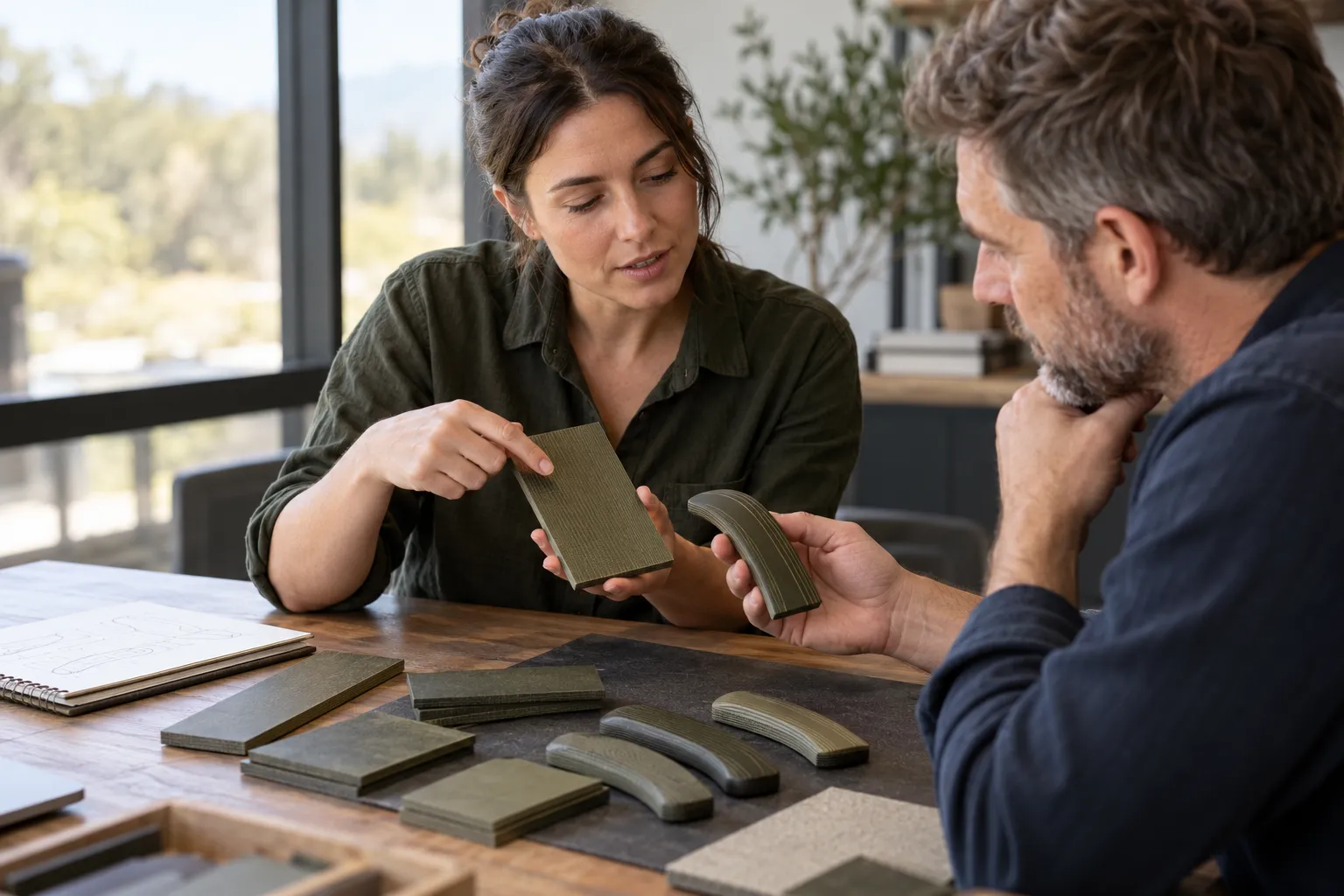
Knife makers often choose Micarta-style laminates when they want a handle that feels warm and natural but performs more consistently than untreated wood. The material combines layers of fabric or paper with a thermosetting resin, then uses heat and pressure to create a dense laminate. Once shaped and finished, the reinforcement pattern becomes part of the handle’s appearance and texture.
Micarta® is a registered trademark with a long industrial history. In general product descriptions, non-branded equivalents are more accurately called phenolic fabric laminate, cotton-cloth laminate, canvas laminate or paper-based phenolic laminate. In the knife community, however, “Micarta” is widely used as a familiar category term. Buyers should therefore confirm the actual reinforcement, resin system, colors and specification rather than relying on the name alone.
What Is Micarta Knife Handle Material Made Of?
A typical knife-handle laminate has two essential parts: a reinforcement and a cured resin matrix. The reinforcement may be canvas, cotton cloth, linen, burlap, denim, paper or another woven material. The resin penetrates the layers, bonds them together and cures into a rigid thermoset structure under controlled heat and pressure.
These components contribute different qualities. The fabric creates the visible weave, improves toughness and influences grip. The cured resin provides dimensional stability, moisture resistance and a solid body that can be cut, drilled, sanded and polished. The final result depends on fabric weight, weave, layer orientation, pigment, resin content, pressing quality and cure control.
Common Reinforcement Types
- Canvas-based laminate uses a relatively coarse weave. After shaping or bead blasting, it can produce a pronounced texture and a secure, work-oriented grip.
- Linen-based laminate has a finer weave and can take a smoother, more refined finish. It is popular for compact fixed blades, folders and presentation-oriented designs.
- Paper-based laminate produces fine visual detail and crisp color layers. It can polish well, but the feel and impact behavior differ from heavier fabric grades.
- Specialty fabrics such as burlap or denim can create distinctive patterns, although consistency depends heavily on how the reinforcement is prepared and pressed.
Key Advantages for Knife Handles
1. Reliable Grip in Real Working Conditions
One of the strongest reasons to use fabric laminate is grip. When the surface is left matte, textured or lightly contoured, the exposed weave helps the hand maintain control. This can be especially valuable on outdoor knives, bushcraft tools, hunting knives and workshop blades that may be used with wet or gloved hands.
Grip is not a single fixed property. A highly polished surface will feel smoother than a blasted or machined texture, even when both handles use the same base material. Makers can therefore tune the finish to match the knife’s purpose instead of accepting only one surface character.
2. A Warm, Natural Feel Without Wood’s Grain Variability
Fabric laminate does not feel as cold or metallic as some handle materials. The visible weave and layered edge pattern also give it an organic appearance. At the same time, it does not have knots, grain direction or the same seasonal movement associated with natural wood. This balance is attractive to makers who want a traditional-looking handle with predictable machining behavior.
3. Good Toughness and Everyday Durability
Properly manufactured phenolic fabric laminate withstands everyday impacts, vibration and repeated handling. It does not rust and is generally more resistant to ordinary moisture and oils than untreated natural materials. These qualities support long service life in field knives, utility knives and hard-use tools.
The material should still be selected for the actual environment. It is not accurate to describe every grade as completely waterproof, chemically universal or indestructible. Edge sealing, surface finish, resin quality and long-term exposure conditions all affect performance.
4. Stable Dimensions and Secure Assembly
Consistent thickness and limited movement help makers produce repeatable scales, liners and full-tang handle assemblies. Flat stock can be bonded and mechanically fastened with pins, bolts or tubes. Good surface preparation remains essential: bonding faces should be clean, suitably roughened and free of polishing compounds or contamination.
5. Wide Design Freedom
Solid colors, layered colors and different weave sizes allow one material family to support many styles. A black canvas handle can look understated and professional; green or brown versions suit outdoor designs; contrasting layers become visible around contours and chamfers. Because the appearance develops during shaping, the maker has direct control over how much pattern is revealed.
6. Practical Machining and Finishing
Micarta-style sheets and scales can be sawn, drilled, routed, milled and sanded with common knife-making equipment. Sharp carbide tools, stable workholding and controlled feeds help avoid heat buildup, frayed edges and resin smearing. Progressive sanding can produce anything from a grippy matte finish to a clean satin or polished surface.
Machining produces fine resin and fiber dust. Local extraction, respiratory protection, eye protection and good housekeeping are necessary. The work area should be cleaned with suitable vacuum equipment rather than compressed air that redistributes dust.
Where Micarta-Style Handles Work Best
- Bushcraft and outdoor knives that need a secure grip and a traditional visual character.
- Hunting and field knives exposed to moisture, dirt and repeated handling.
- Kitchen or utility knives where dimensional stability and easy maintenance are important, subject to the maker’s hygiene and bonding requirements.
- Everyday-carry folders requiring thin, accurately machined scales.
- Custom knives that use contouring to reveal layered colors and fabric patterns.
How to Select the Right Material
Start with the intended feel. Choose a coarser canvas when grip and ruggedness matter most, or a finer linen-type reinforcement when detail and a smooth finish are priorities. Next, define the color, layer orientation, sheet or scale dimensions, thickness tolerance and expected surface finish.
For repeat production, approve a physical sample or a clearly identified production lot. Fabric weave, pigment and curing can create small batch-to-batch differences. If left and right scales need to look closely matched, ask the supplier to cut them from adjacent areas and preserve orientation during packing.
An effective request for quotation should include material type, color, reinforcement, finished dimensions, quantity, tolerance, flatness needs, surface expectation and whether CNC-cut blanks or finished components are required. A drawing is strongly recommended for holes, counterbores, slots and complex contours.
Frequently Asked Questions
Is every fabric laminate genuine Micarta®?
No. Micarta® is a registered trademark. Many knife-handle products use a similar layered construction but are made by other manufacturers. Ask for the product identity and describe generic material accurately when trademark status is not confirmed.
Is canvas or linen better for a knife handle?
Neither is universally better. Canvas normally produces a coarser, more tactile surface, while linen can show finer detail and accept a smoother finish. The correct choice depends on the knife, grip design and desired appearance.
Can the material be polished?
Yes. Fine sanding and polishing can create a smooth surface and deepen the color, although heavy polishing may reduce the tactile grip provided by exposed fabric.
Does it require maintenance?
Maintenance is generally simple. Clean the handle with methods compatible with the knife construction and avoid unnecessary prolonged chemical or heat exposure. A matte handle may temporarily darken from oils during use, which many owners consider part of its natural patina.
Conclusion
Micarta-style phenolic fabric laminate offers a valuable combination of grip, toughness, stable dimensions, machinability and distinctive layered character. Its greatest strength is versatility: manufacturers can select the reinforcement and finish for a rugged field knife, a refined folder or a visually individual custom build. For a precise quotation, provide YD Composites with the required color, reinforcement style, thickness, dimensions, quantity and drawings for any machined parts.