 YOUDA COMPOSITE
Introduction
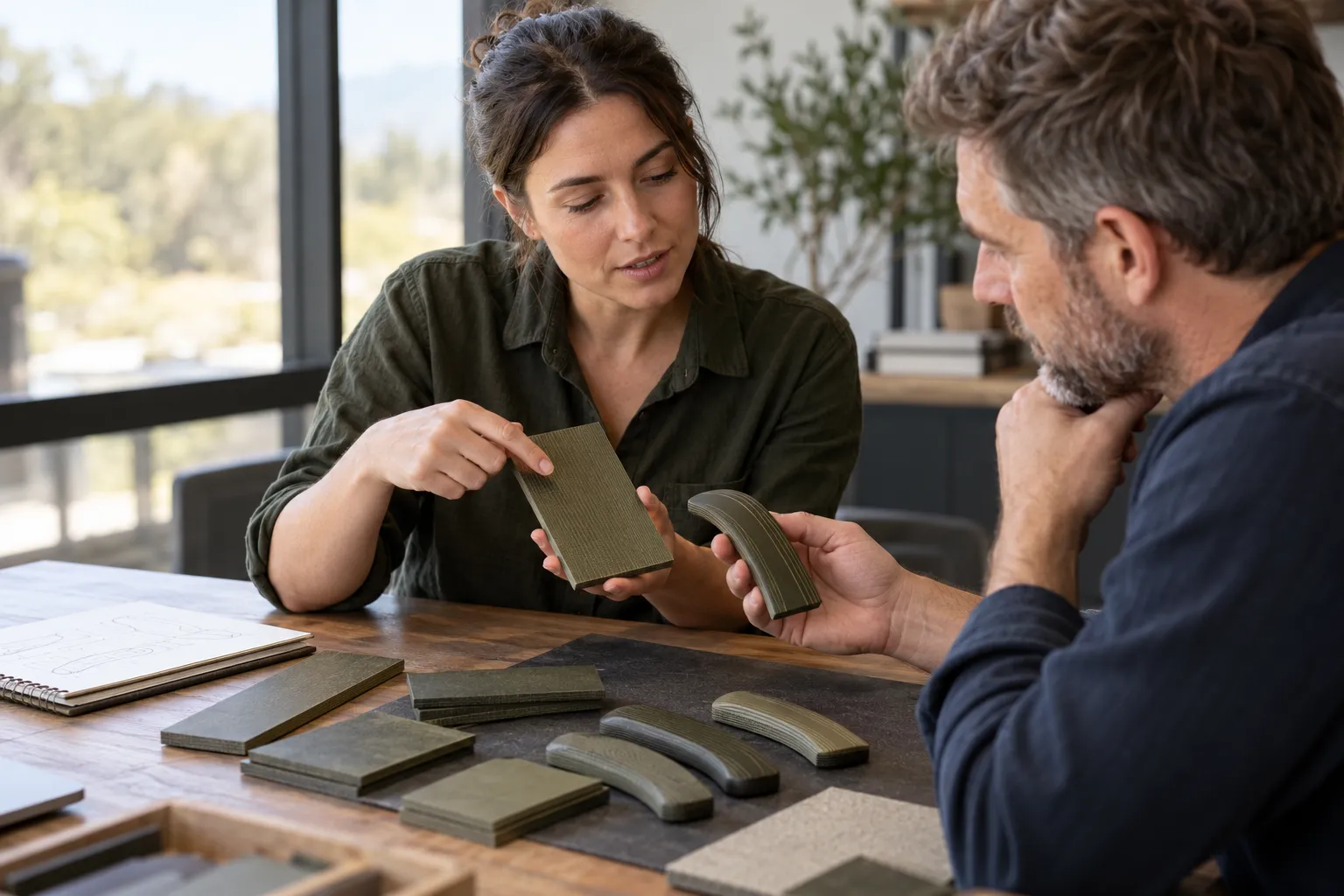
Damascus pattern G10 gives knife makers a way to combine the functional stability of glass-fiber laminate with a flowing, layered appearance. After contouring and sanding, contrasting colors emerge as lines, waves, rings, and topographic shapes, allowing the handle geometry itself to create the final pattern.
This material is especially effective for custom knives, limited editions, outdoor knives, folders, fixed blades, and production models that need a recognizable visual identity. It offers a decorative alternative to plain G10 while retaining the moisture resistance, rigidity, and machining versatility expected from a composite handle material.
What Does “Damascus Pattern G10” Mean?
Damascus pattern G10 is made from alternating or arranged colored layers of glass-fiber-reinforced laminate. The name refers to the visual impression of flowing contrast. It does not mean the handle material is Damascus steel, nor does it imply that it is made by forge-welding metal layers.
The visible pattern depends on how colored layers are stacked and how the finished handle cuts through them. On a flat face, the material may show relatively broad bands. When the maker adds finger grooves, bevels, palm swells, chamfers, or sculpted depressions, new layers are exposed and the pattern becomes more complex. This makes every handle design an active part of the visual result.
Why Knife Makers Choose Damascus Pattern G10
Distinctive appearance. Alternating colors create movement and depth without relying on printed decoration. The pattern continues through the laminate, so shaping reveals additional visual detail rather than removing a surface image.
Composite durability. Like other G10 handle materials, Damascus pattern G10 is designed around reinforced laminate construction. It offers good dimensional stability and low moisture sensitivity compared with many natural materials.
Design control. Makers can influence the pattern through scale orientation, profile placement, contour depth, and finishing method. One sheet can produce different visual effects depending on how the parts are nested and machined.
Useful balance of individuality and repeatability. The color combination and general pattern family can remain consistent across a product line, while each finished scale still shows small differences. This is attractive for knives that should look related but not completely identical.
Strong pairing options. Black-and-color patterns work well with coated blades and dark hardware. Brighter combinations can support outdoor, collector, or display knives. Neutral layered patterns can add depth while remaining understated.
How Machining Reveals the Pattern
The raw sheet is only the starting point. Pattern development happens when the tool path passes through colored layers at different depths. Shallow contours produce wider, calmer bands. Deep scallops or grooves can create tighter lines and more dramatic transitions. Symmetrical machining can make paired scales look coordinated, while rotated nesting can create deliberate contrast between the two sides.
Because the visual result depends on material removal, knife makers should consider pattern direction during CAD and nesting. Critical visual areas should not be left to random placement. For a new model, it is sensible to machine a prototype or a small trial set before approving a larger batch.
The pattern is not a guarantee that every blank will look identical. Normal variation is part of the material’s appeal. Buyers who require matched scales should define what “matched” means—such as mirrored orientation, similar color balance, or adjacent cutting position—before ordering.
Surface Finish: Matte, Textured, or Polished
Finishing changes both the appearance and the grip. A fine matte finish softens reflections and suits working knives. A polished finish can deepen color contrast and make the layered pattern more vivid, especially around sculpted edges. However, a highly polished flat surface may provide less traction when wet.
CNC texture can add grip, but very dense texture may visually compete with the layered design. A balanced approach is often best: use contours to reveal the Damascus-style pattern, then add functional texture only where the fingers and palm need it. Edge rounding and gradual transitions also help the pattern flow naturally across the handle.
Applications and Design Directions
Damascus pattern G10 works well for full-tang fixed-blade scales, folder scales, backspacers, bolsters, inlays, and decorative components. It can be used as the main handle material or combined with solid-color G10 liners to introduce another layer of contrast.
For tactical and outdoor knives, darker combinations provide visual interest without becoming overly decorative. For collector knives and limited editions, brighter colors and deeper contours can create a stronger signature. In production designs, a controlled two-color combination is often easier to coordinate with blade coatings, logos, packaging, and replacement components than a highly complex multicolor scheme.
Machining and Safety Considerations
The layered colors do not remove the normal machining considerations of G10. Glass reinforcement is abrasive, so sharp carbide tooling, stable workholding, appropriate feeds and speeds, and effective dust extraction are important. Excess heat or dull tooling can reduce edge quality and make finishing more difficult.
Cutting, drilling, routing, and sanding generate fine composite dust. Use suitable extraction, respiratory and eye protection, protective clothing or gloves where appropriate, and safe cleanup procedures. Do not treat patterned G10 as if it were ordinary decorative plastic. Workshop controls should be based on the material safety information and local occupational rules.
How to Order Damascus Pattern G10
A clear inquiry should include the preferred color combination, sheet or scale size, thickness, quantity, surface condition, and required machining. If the final pattern is important, provide the knife drawing, scale outline, contour model, or reference image. This allows the supplier to discuss pattern direction, cutting layout, thickness allowance, and whether adjacent or paired blanks are needed.
Color photographs should be used as visual references rather than absolute color standards. Lighting, camera settings, displays, sanding grit, polishing, and oil or moisture on the surface can all change the apparent shade. For a new product line, approving a physical sample before bulk production is the safest approach.
More G10 and composite knife-handle material options can be explored at https://ydcomposites.com/. Availability of a specific color stack, thickness, scale size, or machining service should be confirmed for each project.
Frequently Asked Questions
Is Damascus pattern G10 made from Damascus steel? No. It is a glass-fiber composite handle material whose layered colors create a Damascus-inspired visual effect.
Is the pattern printed on the surface? No. The pattern comes from differently colored material layers, so additional layers appear as the handle is contoured.
Will every pair of scales have exactly the same pattern? Not automatically. General color and layer structure can be consistent, but the precise lines depend on cutting position, orientation, and machining depth. Matched-pair expectations should be specified.
Does polishing improve the pattern? Polishing usually increases color depth and contrast, while a matte finish produces a quieter working look. Grip requirements should be considered before choosing a high polish.
Can it be CNC machined? Yes. It can be CNC cut and textured with suitable composite tooling, machining parameters, dust control, and finishing allowance.
Conclusion
Damascus pattern G10 turns handle geometry into part of the design process. Its layered construction reveals new lines as the scale is shaped, giving knife makers more creative control than a surface-printed pattern while maintaining the practical advantages of reinforced composite material.
Successful use depends on planning the layer direction, prototyping the contour, balancing grip with visual clarity, and defining acceptable pattern variation. With those details established, Damascus pattern G10 can give a knife line a distinctive identity without sacrificing day-to-day handle performance.