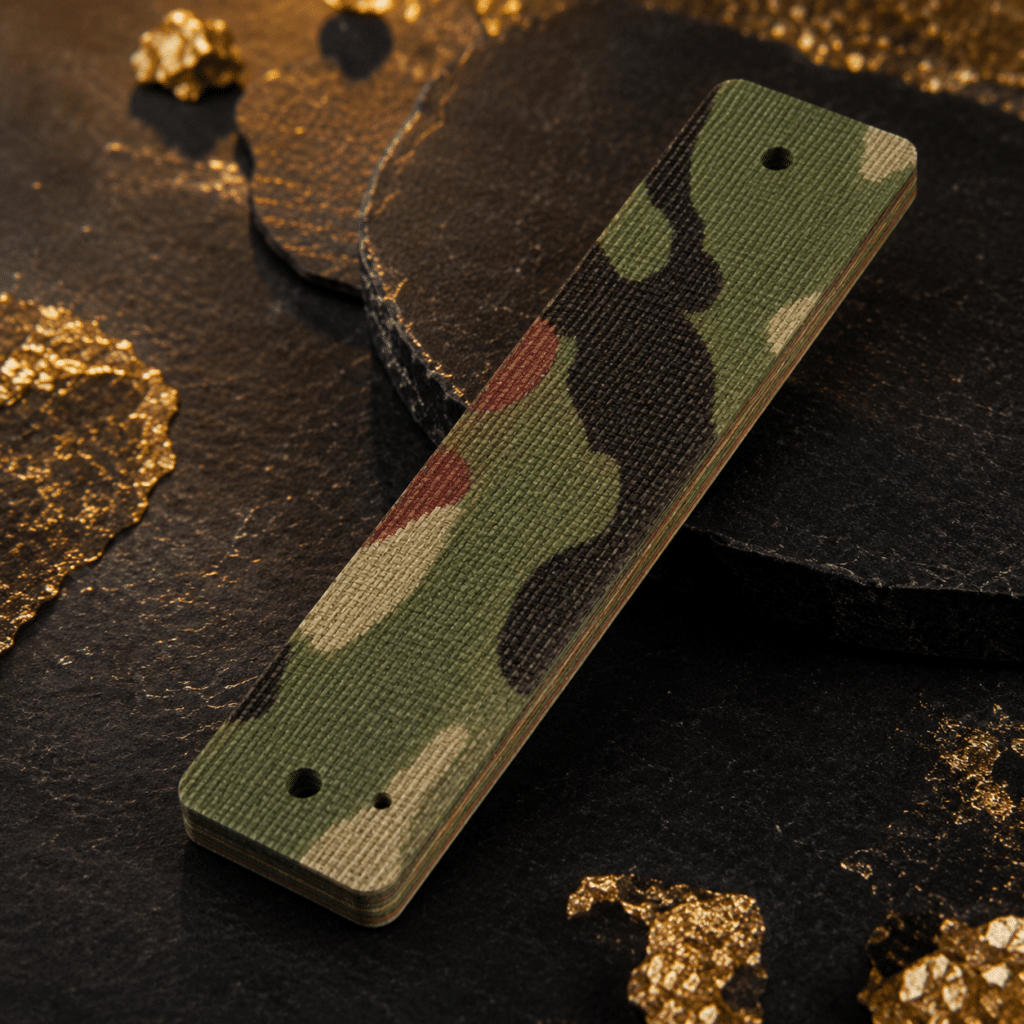
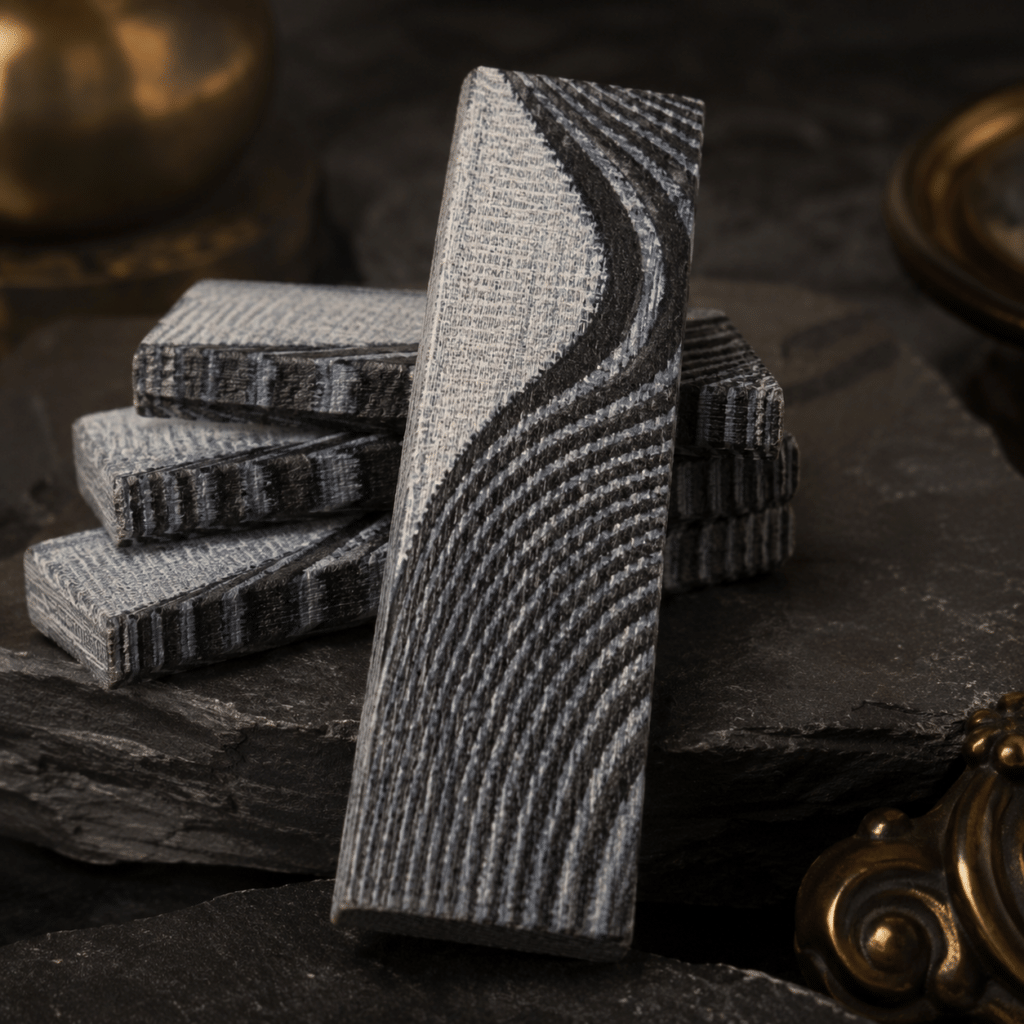
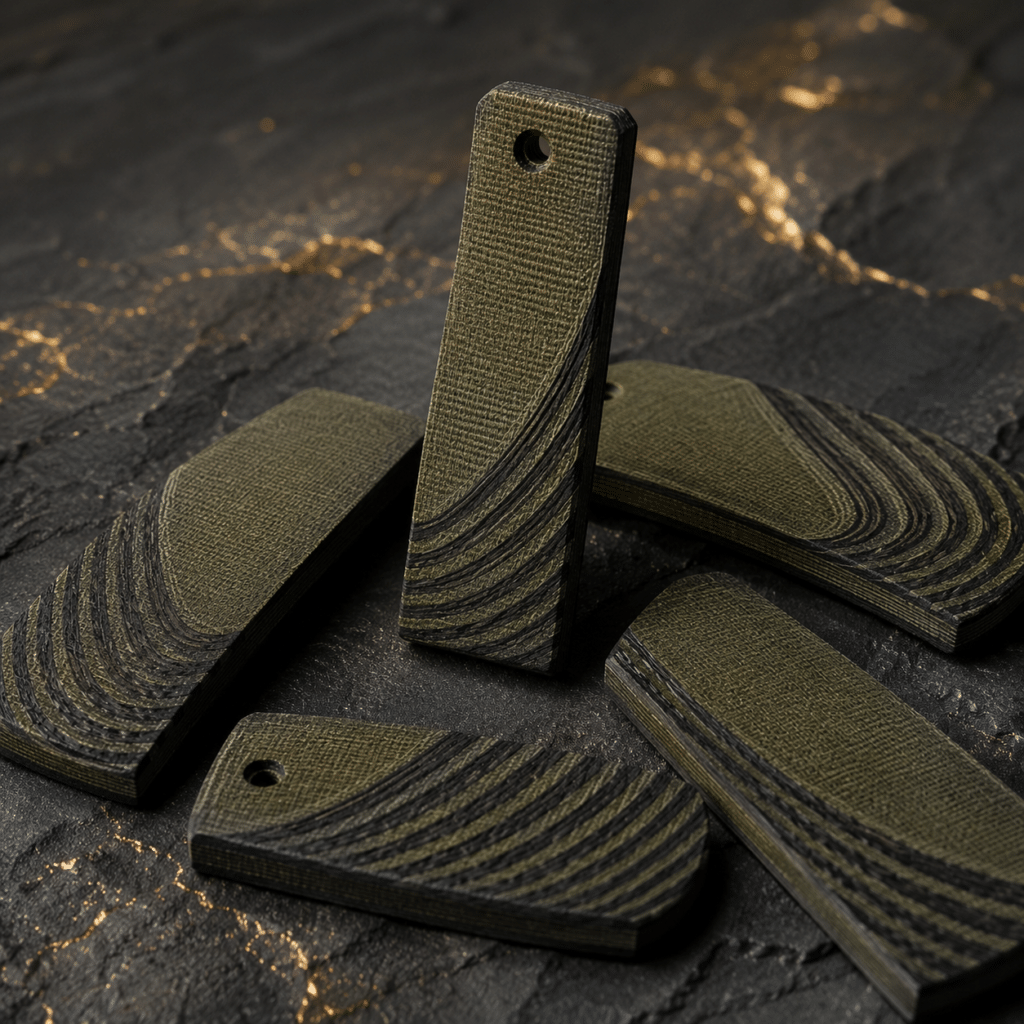
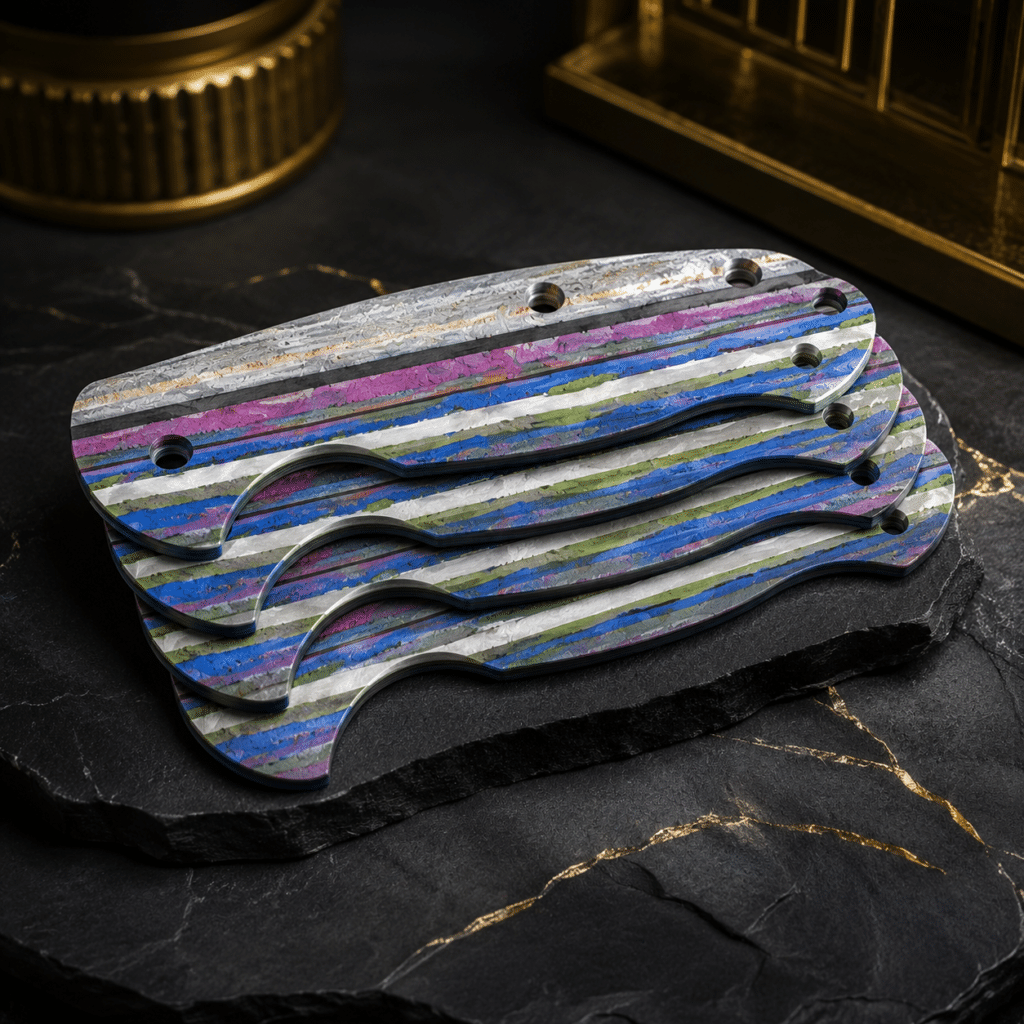
Introduction A knife handle must do more than look attractive. It has to remain stable in changing weather, provide secure control, tolerate repeated use, and support accurate machining. Solid color G10 meets these requirements with a clean appearance that works across outdoor knives, tactical knives, kitchen knives, folders, and production models. Made by combining woven […]
Introduction Knife-handle materials are increasingly expected to combine practical performance with a recognizable visual identity. Luminous carbon fiber answers both needs by pairing the technical appearance and low weight associated with carbon-fiber composites with photoluminescent elements that become visible after exposure to light. The result is a handle material that can look refined in normal […]
Introduction Environmental questions are becoming more important in the knife industry. Buyers want durable handles, but they also want to understand what materials are made from, how much waste machining creates, whether finished parts can be repaired, and what happens at the end of a product’s life. G10, phenolic fabric laminate, and carbon fiber are […]

Reshoring is not always an all-or-nothing decision. Many knife makers gain resilience by moving cutting, machining, finishing or final assembly closer to customers while keeping qualified global sources for specialized laminate sheet. The best model depends on volume, lead time, equipment and traceability needs. Key takeaway The most defensible material decision connects performance, traceable composition, […]
There is no single ‘2026 tariff on Chinese knife-handle composites.’ The duty paid depends on the product’s HTSUS classification, country of origin, construction, whether an additional tariff program covers that code, and the customs value. Buyers should calculate landed cost at the SKU level. Key takeaway The most defensible material decision connects performance, traceable composition, […]
PFAS regulation is moving quickly across the United States and Europe. That does not mean every composite contains PFAS, and it does not justify a blanket PFAS-free claim for every G10, fabric laminate or carbon-fiber sheet. Formulations, release films, processing aids, coatings and supplier controls vary. Key takeaway The most defensible material decision connects performance, […]
REACH, RoHS and CBAM are often grouped together in supplier questionnaires, but they regulate different things. REACH addresses chemicals in the EU market. RoHS restricts specified substances in electrical and electronic equipment. CBAM prices embedded carbon in listed carbon-intensive imports. A knife-handle sheet is not automatically in scope of all three. Key takeaway The most […]
Right-to-repair discussions usually focus on electronics and appliances, but the design principle is relevant to knives: a worn, damaged or unwanted handle should not automatically end the life of a serviceable blade. Durable, replaceable handle scales turn maintenance into a planned feature. Key takeaway The most defensible material decision connects performance, traceable composition, manufacturing yield […]
The next generation of knife-handle materials will not be defined by one miracle resin. Progress is more likely to come from several improvements working together: lower-impact feedstocks, safer chemistry, renewable electricity, higher manufacturing yield, longer product life and better documentation. Key takeaway The most defensible material decision connects performance, traceable composition, manufacturing yield and service […]
Wood and fabric laminate can both make excellent knife handles, but they solve different problems. Wood begins with a renewable biological resource; phenolic fabric laminate combines textile reinforcement with a thermoset resin to produce a stable engineered material. Sustainability depends on sourcing, processing, useful life and repair—not appearance alone. Key takeaway The most defensible material […]
 YOUDA COMPOSITE